



As the global gaze turns to the 16 cities across North America hosting the 2026 FIFA World Cup, organizations in those locales are adopting creative approaches to their programming that connect to this coming together of nations to watch the world’s most popular sport. At the Pacific Bonsai Museum, a newly opened exhibition, Bonsai United, brings to life an idea that curator Aarin Packard has been ruminating on for years. Starting last summer, he spent months interviewing 36 top bonsai practitioners from 15 countries to learn more about how distinct aesthetics and traditions have developed and evolved around the world.
“My undergrad is in cultural anthropology, and one of the things I like to do is study other cultures and bonsai,” Packard says, noting that he looks for emerging patterns that connect back to the zeitgeist or culture at large. “Take soccer as a metaphor. “It’s singular sport, right? The rules are the same, the goal is the same. But in the World Cup you have all of these teams, each one representing a different nation. And in the style that they play, you can almost see a little bit of their culture, whether its Brazil that has a much more fluid, almost dancing style, or Germany that tends be more formulaic and disciplined.”
Packard likens these playing styles to different countries’ approaches to bonsai, which are informed not only by environmental factors—weather and topography affect what can grow where—but also by social and artistic ones. “There’s a cultural framing that influences aesthetic tastes and interest,” Packard says. For example, the Europeans have an ingrained appreciation for the tradition of craftsmanship, while Brazilian bonsai artist have adapted their soil by adding particles from smashed clay roof tiles to mimic Japanese soil, which is expensive to import.
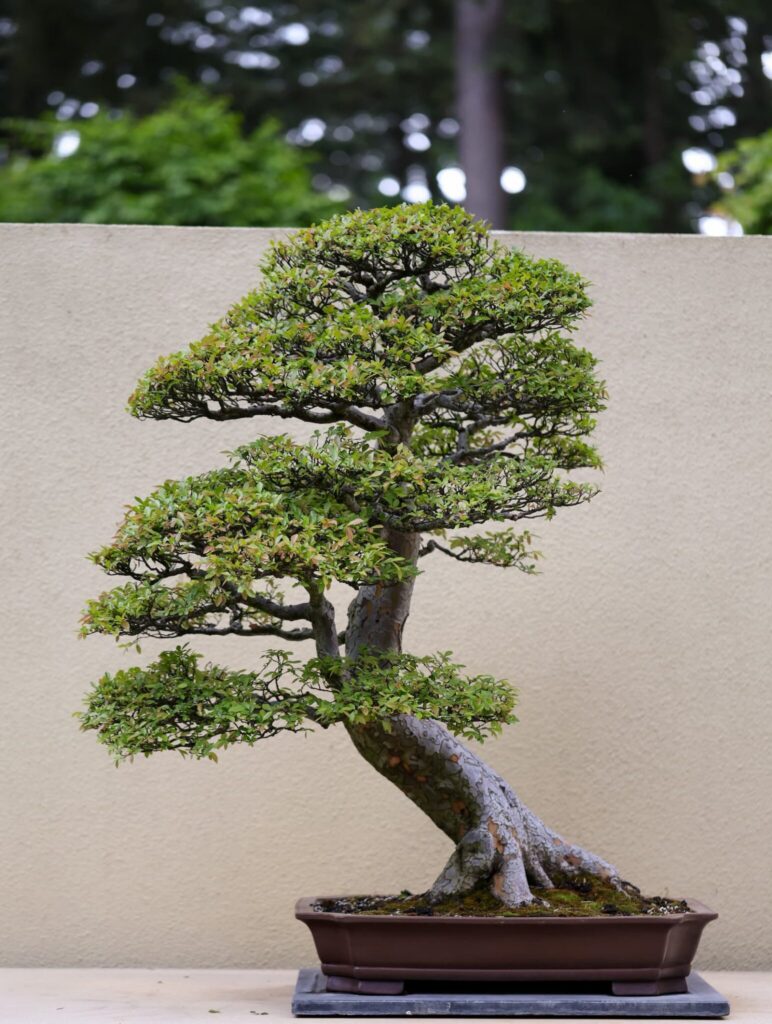
Photo by Matt Aimonetti
Bonsai United delves into these differences, using a series of panels that break down the role of the environment, culture, and individual artistic expression in each country featured. The exhibition starts with Asia, working through China (where the practice originated), Japan, and other countries along the path it spread as it moved westward. “You’re actually following the path that bonsai has taken through cultural history and dissemination,” Packard says of the trees grouped throughout the exhibition. “It helps give you a sense of how this art form has spread over time to become a global practice today.”
To supplement the exhibition, the museum—opened by Weyerhaeuser Company in 1989 (then called the Collection) to celebrate the Washington State Centennial—is launching an audio tour through its Bloomberg Connects guide, so visitors can hear directly from bonsai artists in countries like Australia, Mexico, Spain, and China. The institution is one of only a few public collections worldwide solely dedicated to bonsai, and displays approximately 50 of its 150 seasonally rotating specimens at a time.
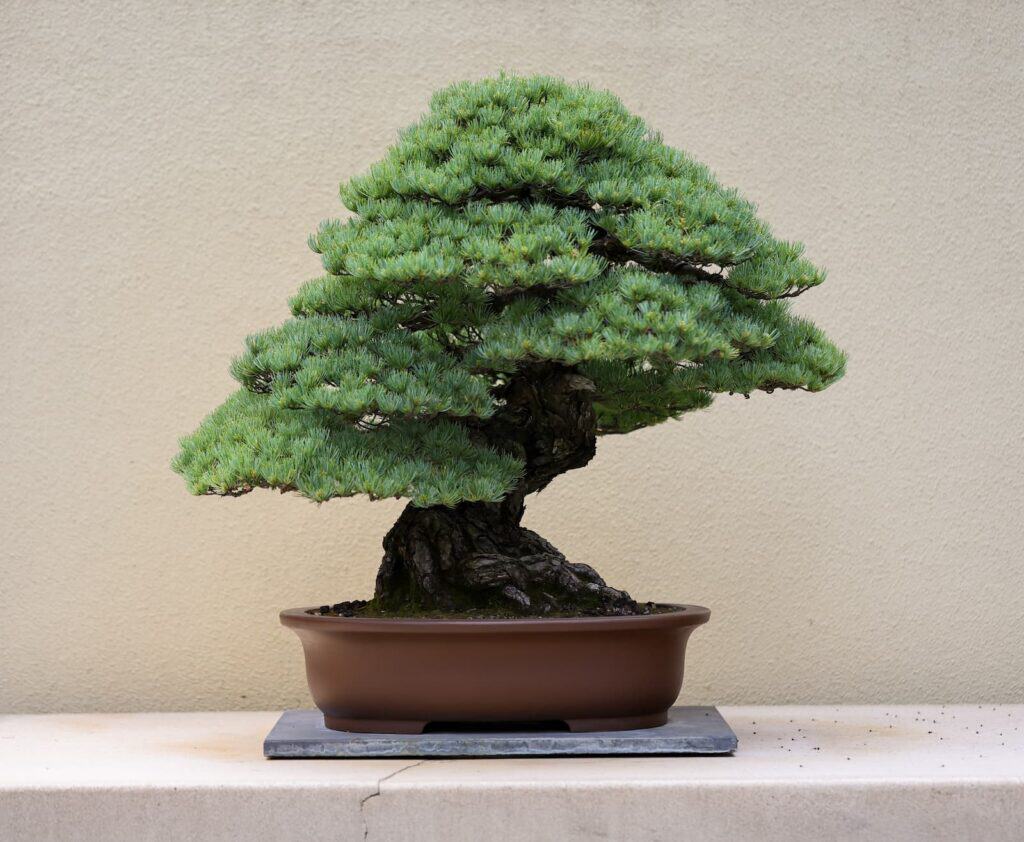
Photo by Matt Aimonetti
Photo by Matt Aimonetti
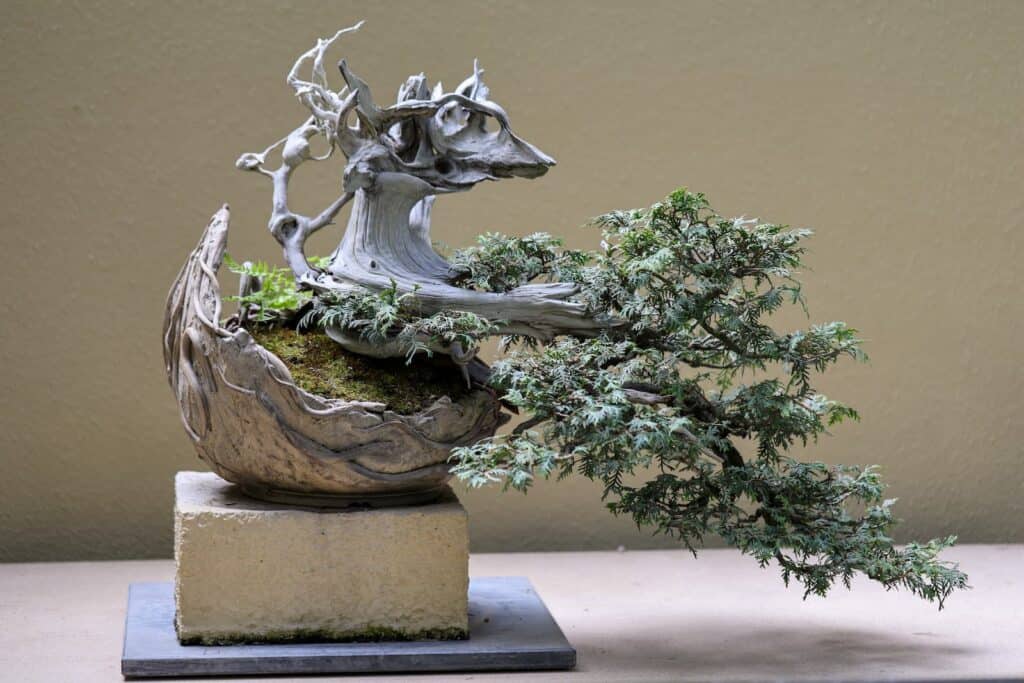
Photo by Matt Aimonetti
One interesting fact that Packard shared has to do with the origin of bonsai trees, many of which at the Pacific Bonsai Museum are decades old. “Most bonsai don’t start from a seed,” he says. “They start from an already established plant. A lot of the times it’s been naturally stunted by the environment. If you ever go up to the Cascades, and you get to, like, Paradise, or high enough, the trees start to get smaller and smaller because they’re naturally stunted by the environment. That’s, nature kind of doing its part, and so we’ll be looking to collect those trees.”
Once collected, the trees are planted in carefully selected container (the translation of “bonsai” means “planted in a container”), then tended and maintained using pruning and wires to help shape growth. Of course, that’s a very simplified description, and more advanced bonsai artists may use different techniques—stripping bark, defoliation, grafting—to produce unique character in their trees.
The cultural differences that come through in the exhibition are fascinating, and for the average visitor, it’s impossible to leave without learning something. For Packard, it’s as a much an ode to the art as display of miniature trees. “The exhibition is acknowledging all the cultures that have played a role in getting bonsai to where it’s at today.”
Bonsai United runs through December 2027 at the Pacific Bonsai Museum.