



Built in B.C. | Building B.C.
A series exploring how Innovate BC-supported projects are helping organizations solve real-world challenges through made-in-B.C. innovation.

Lax Kw’alaams First Nation, located on British Columbia’s North Coast, has a long history of conservation management and connection to the lands and waters of the Skeena estuary. Through an Integrated Marketplace project at the Orde Point Fish Trap, the Nation is working with innovators Ocean Aid and Salmon Vision to test an AI-enabled monitoring solution designed to support salmon monitoring efforts while improving the efficiency and safety of data collection activities.
Developed by the Government of British Columbia with support from the Government of Canada through PacifiCan, the Integrated Marketplace is delivered by Innovate BC and is designed to help organizations test, deploy, and scale made-in-B.C. innovation while reducing the financial risks associated with technology adoption. By supporting collaborative innovation projects between solution adopters representing key provincial sectors and B.C. innovators, the program supports the success and growth of its participants while helping address priority opportunities related to productivity, decarbonization, and safety.
Innovate BC’s Executive Director of Program Strategy and Delivery, Sheila Schindel, spoke with Katherine Pollock, Senior Biologist for Lax Kw’alaams, about the challenges facing salmon monitoring today, the opportunities created by combining Indigenous knowledge with emerging technologies, and the role of partnerships in advancing innovation-driven approaches to conservation and sustainable management.
What challenges with existing salmon monitoring methods led Lax Kw’alaams First Nation to explore new approaches at the Orde Point Fish Trap?
KP: Traditional monitoring methods, while historically vital, present intense operational bottlenecks during the peak fishing season. Managing a remote fish trap manually requires continuous, high-frequency physical presence, which strains our limited technical field crews and vessel operators.
Logistically, manual counting and sorting can introduce unintended handling stress to wild salmon stocks and require our team to work in volatile river conditions. Furthermore, processing vast amounts of raw field data into actionable conservation metrics takes time. To protect Lax Kw’alaams’ Section 35.1 Title and Rights, we need real-time, high-integrity data to make rapid management decisions. Exploring automated, non-invasive technology allows us to address these capacity constraints while keeping our team safe.
This project brings together Indigenous knowledge, community leadership, and emerging technologies such as AI-enabled monitoring. What opportunities do you see in combining these approaches to support salmon conservation and management?
KP: The true strength of this initiative lies in the fact that technology is not replacing our management; it is being guided by it. Lax Kw’alaams has managed these waters for millennia. By pairing our traditional ecological knowledge and community-led operational plans with advanced tools like AI, we create an incredibly robust management framework.
AI-enabled monitoring allows us to translate our ancestral role as ecosystem and species managers into modern, undeniable, data-driven credibility on local, national, and global scales. It gives us the precise technical tools required to co-manage the Skeena watershed alongside federal regulatory bodies like the DFO, ensuring our community’s voice and priorities are backed by cutting-edge science.
The project aims to automate parts of the monitoring process while improving safety and efficiency. What impact could this have for your team and for the long-term sustainability of monitoring efforts in the Skeena watershed?
KP: From a day-to-day operations standpoint, it is a game-changer for our team’s mental fatigue and workload. Instead of having technicians spend exhaustive hours manually sorting and logging fish counts on weekends and in shifting weather, AI automation handle the initial data categorization. This shifts our human capacity toward higher-level analysis, strategic project development, and habitat restoration.
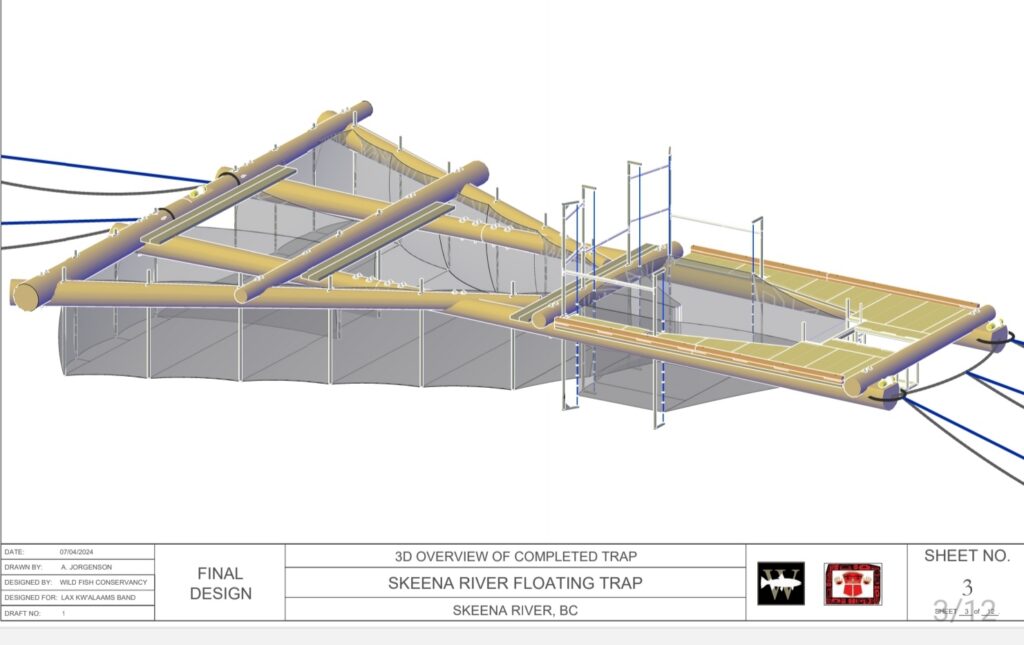
Long-term, this dramatically improves the financial and operational sustainability of our programs. By lowering the marginal cost and safety risks of continuous monitoring, we can keep the Orde Point Fish Trap active longer through changing seasonal demands. It builds local capacity, providing predictable, high-tech employment and training opportunities for Lax Kw’alaams community members right here in their home territory.
Through the Integrated Marketplace, Lax Kw’alaams First Nation is working directly with innovators Ocean Aid and Salmon Vision to test a new solution in a real-world environment. How important are partnerships like these in helping communities address complex challenges through innovation?
KP: Partnerships like these are absolutely essential. Complex ecological challenges, like the rapid status review and conservation of Skeena Sockeye, cannot be solved in isolation. Working directly with tech innovators like Ocean Aid and Salmon Vision allows us to actively co-design tools that actually fit the harsh reality of North Coast field environments, rather than adopting generic, off-the-shelf software.
Through the Integrated Marketplace, we ensure that the intellectual property and data collected respect Lax Kw’alaams’ data-sharing protocols and sovereign interests. These collaborations allow a First Nation-led program to pilot cutting-edge, real-world solutions—demonstrating that Indigenous communities are not just participants in environmental innovation, but the ones actively driving it.
The post How Lax Kw’alaams First Nation is Combining Indigenous Knowledge and AI to Support Salmon Conservation appeared first on Techcouver.com.
How Lax Kw’alaams First Nation is Combining Indigenous Knowledge and AI to Support Salmon Conservation was first posted on July 13, 2026 at 9:00 am.
©2022 “Techcouver.com“. Use of this feed is for personal non-commercial use only. If you are not reading this article in your feed reader, then the site is guilty of copyright infringement. Please contact me at rob@kitsilano.ca