



Looking back, I wouldn’t say my family teaming up to launch Pickle at the Palms—a new 20-court indoor pickleball club—was inevitable, but it may have been predictable.
Sports have shaped my life for more than 50 years. I fell in love with rowing as a 17-year-old college freshman and went on to compete on two U.S. national teams and two Olympic teams, winning a silver medal at the 1984 Los Angeles Games.
When I had children, sports naturally became part of their lives, too. Between them, they played just about everything: soccer, tennis, golf, skiing, football, rowing, track and field, and basketball. My daughter, Sierra, competed in three sports at the state championship level in high school, won multiple state soccer titles, and earned a Division I scholarship to Colorado College. She eventually married Kyle, a fellow athlete who played Division I tennis at Eastern Washington University and who now serves as general manager of Pickle at the Palms. Sierra, an artist and interior designer, has led the creative vision for The Palms, from the merchandise line to many of the design details throughout the center.
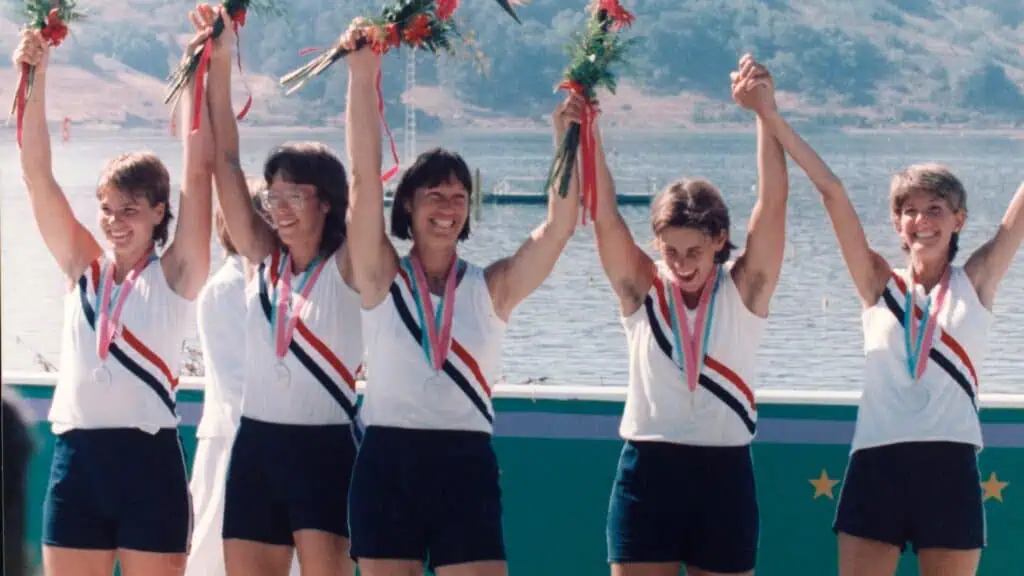
Celebrating winning silver at the 1984 Los Angeles Olympics.
Photo courtesy of Ginny Gilder
Sports haven’t been the only influence on me, of course. I realize now that my father has had an immense impact on me, especially when it comes to taking on projects that bring people together and leave a lasting impact.
Thirty years ago, he and I partnered to help fund and design a new boathouse for Yale University’s rowing program. The original facility, where I first rowed in the 1970s, reflected the inequities female athletes routinely faced. The women’s team didn’t have a locker room or showers and had only one bathroom—shared with visitors on race days. Although a small addition was built in 1977, the aging structure was no longer adequate.
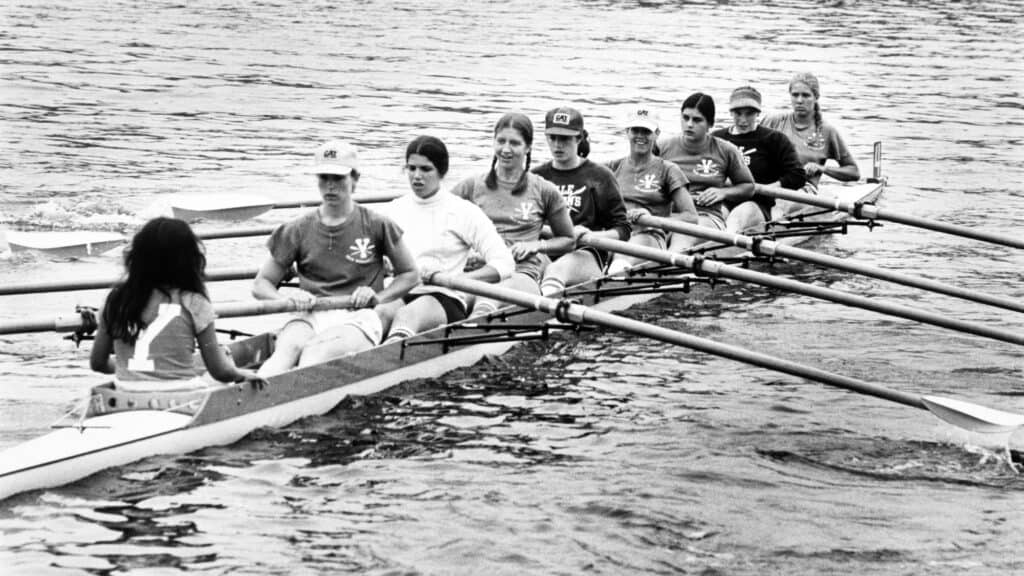
Rowing at Yale in the 1970s.
Photo courtesy of Ginny Gilder
Knowing how much rowing had changed my life, my father stepped forward to help create something better.
That was who he was. He believed in expanding access to opportunity. Throughout his life, he supported projects that made recreation, history, and culture more accessible, from helping revitalize Central Park to leading expansions of the American Museum of Natural History. He invested in communities by pursuing work that reflected what he loved.
Working alongside my dad to create a better, more equitable boathouse at Yale remains one of the highlights of my life. Together, we brainstormed ideas, solved problems, built support for the project, and ultimately helped create an award-winning facility that continues to serve generations of rowers. More importantly, though, we convinced the university to establish a community rowing program for local youth, ensuring the boathouse would benefit far more than Yale athletes.
That experience stayed with me.
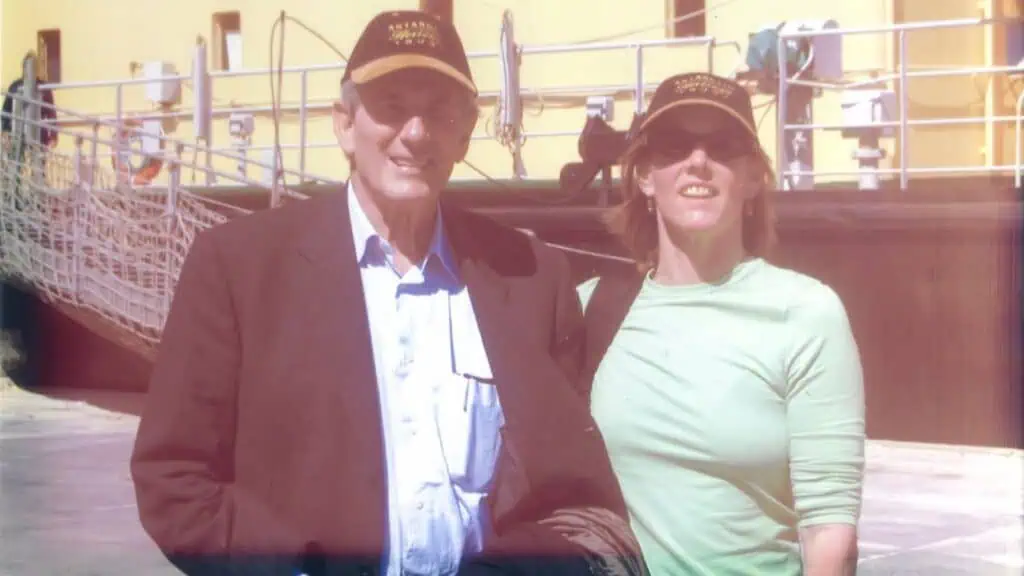
My father and I worked together to create a more equitable boathouse at Yale, an experience that shaped how I think about sports, family, and community.
Photo courtesy of Ginny Gilder
Fast-forward to 2020. As a majority owner of the Seattle Storm, fresh off our fourth WNBA championship, I convinced my partner, Lisa Brummel, that it was time to build the league’s first dedicated practice center.
Like my father before me, I wanted the project to serve more than elite athletes. I wanted kids to have a place to learn and play basketball, and I wanted to raise expectations for what women athletes deserve. After years of accepting facilities that fell short, it was time to build something that reflected the excellence of the players who would call it home.
The BECU Storm Center for Basketball Performance opened in April 2024. Sierra served on the project’s art committee, helping shape everything from artist selection and color palettes to the building’s overall visual identity. She watched an ambitious idea evolve into a 50,000-square-foot home for the Storm, a place designed to inspire both players and the surrounding community.
Then, before the Storm Center was even finished, Sierra launched a new conversation one morning while we were making breakfast together.
“Mom,” she asked, “what are you going to do with that property up the street?”
She was talking about a long, narrow parcel on 15th Avenue West that our family had owned since 2009. For years, I had wondered what to do with it.
“What if we built a place to play pickleball?” she suggested.
The rest, as they say, is history.
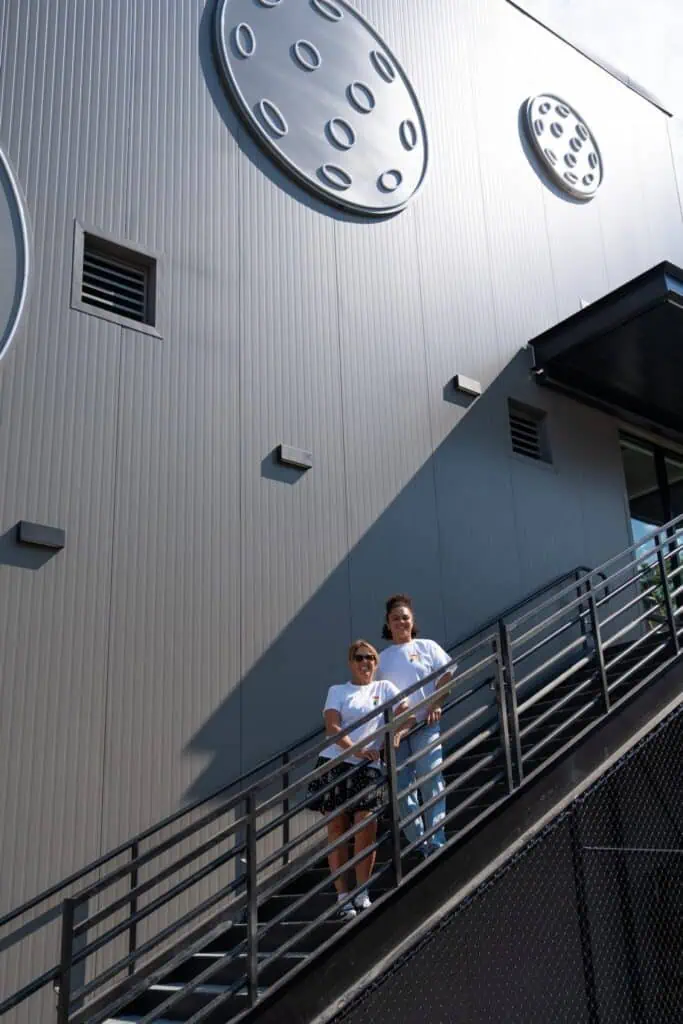
Me and Sierra at Pickle at the Palms.
Pickle at the Palms exists because of a shared belief that sports bring people together. We want to create Seattle’s first purpose-built indoor pickleball center, not just a place to play, but somewhere to gather.
We believe sports teach resilience, confidence, teamwork, and joy. We are building a welcoming space where people can escape a rainy Seattle day, meet new friends, grab a bite or a drink, celebrate victories, laugh through losses, and become part of a community.
I can trace a clear thread connecting each generation. My father invited me to dream alongside him, and years later, I invited Sierra to help shape the vision for the Storm’s new home. Then she brought me an idea of her own and invited me to build it with her—something neither of us could have imagined just a few years earlier. This is the power of family. We turn dreams into shared projects, and those projects strengthen communities. If we’re lucky, each generation creates something that inspires the next.
That’s the story of Pickle at the Palms. At its heart, it’s a story about family, community, and the enduring power of saying yes when someone asks, “What if?”
Pickle at the Palms, the 20-court indoor pickleball club in Seattle’s Interbay neighborhood, is set to open in August.