



Labor’s 15-year tax cutoff could drive biotech trials offshore and choke late-stage funding; see why science groups want Senate action.
The mess created by Labor’s changes to capital gains tax (CGT) and the R&D tax incentives, currently before the Senate, could see biotech startups look overseas just they start to commercialise their ideas in late-stage clinical trials.
Meanwhile investors supporting them will miss out on the CGT breaks that make backing these long- shots worthwhile, a slew of peak science bodies have warned.
AusBiotech, the Australian Academy of Science, Medicines Australia, ANDHealth and deep tech incubator Cicada Innovations are among 18 science and industry groups that signed a letter to senators warning them about the impact of the new legislation ahead of today’s scheduled debate on the bill. Their concern is how a biotech turning 15 will fund its most expensive trial.
The new laws in the Treasury Laws Amendment (Tax Reform No. 4) Bill, bundle together the Innovative Business CGT Concession (IBCC), changes to the R&D Tax Incentive (RDTI) and venture capital incentives. Despite months of retrofitted consultation on the changes by the government, the final bill, which has passed in the lower house, still faces strong opposition.
Under Labor’s bill, investors could claim a 50% CGT discount on qualifying shares held for at least three years. The biotech groups want newly issued shares in eligible listed companies to qualify too. A float can finance a biotech’s first trial. Perth’s Argenica Therapeutics raised $7 million in its 2021 ASX listing to test a stroke drug in humans. The groups warn that favouring private investment could push companies overseas for capital, taking jobs and intellectual property with them.
Under the bill now in the Senate, deep tech startups could lose the refundable R&D tax offset just as they reach the point of success. Investors buying newly issued shares could also miss out on the proposed Innovative Business CGT Concession, making capital harder to raise as the cash refund dries up.
Get the best of Startup Daily straight to your inbox
Want to know the latest in startup news? Subscribe to our daily news and analysis coverage on what’s happening to ANZ startups, investors and the broader ecosystem. And best of all, it’s FREE!
By continuing, you agree to our Terms & Conditions and Privacy Policy.
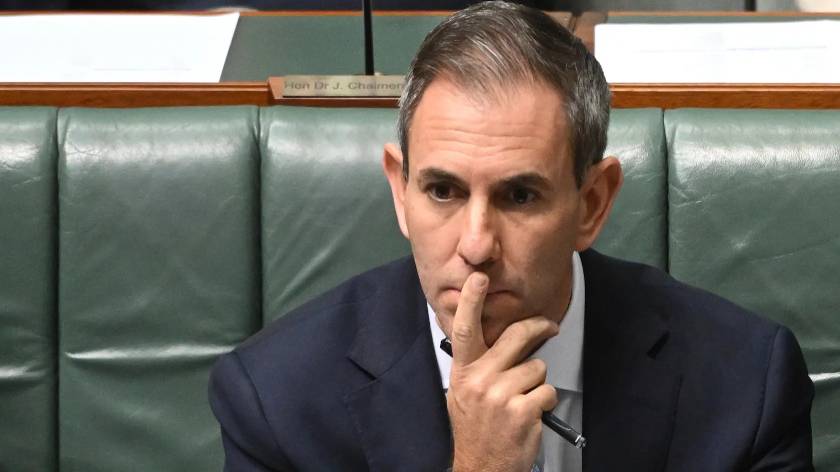
Treasurer Jim Chalmers at least extended the cut off from 10 to 15 years for eligible therapeutic goods research following widespread alarm and backlash, but the sector’s concerns remain unresolved.
As the biotech signatories pointed out in a detailed letter to the treasurer two months ago, a startup can spend much of that time on preclinical research and early human trials. By year 15 it may still have no sales, yet face the cost of larger trials and new manufacturing facilities.
Liberal MP Aaron Violi told parliament during debate in October that he’d spoken to a 17-year-old biotech midway through a $40 million phase three trial. He said the changes would cost the unprofitable company $4 million to $5 million in cash flow.
The Senate letter signatories want the age limits removed. Their fallback is at least 20 years for eligible life sciences and deep tech companies, with continued access while clinical trials are under way. They say 90,000 Australians participate in clinical trials each year.
The cost of a trial batch
Another key concern is the changes to definitions of R&D that attracts the tax incentive.
Manufacturing a batch of medicine for patients in a trial currently counts as “supporting” R&D. So does much of the work to document its quality, meet regulatory requirements and interpret technical results. The signatories say a trial cannot legally start or continue without that work.
From July 2028, the bill would end claims for supporting activities. The treasurer could approve work “integral” to an experiment through a separate legislative instrument. Labor has promised consultation on clinical manufacturing in early 2027. The groups want parliament to write that protection into the bill so companies budgeting for trials know what they can claim.
In September, they told Chalmers that an analysis of Australian life sciences companies found some could lose up to 60% of their refunds if supporting activities were excluded, despite having to do the same work.
AusBiotech CEO Rebekah Cassidy said the life sciences sector employs about 350,000 people.
Chalmers claimed in parliament that the changes, including higher offsets for core research, would lift R&D investment by young companies by $400 million a year.
Spender’s 40% alternative
The CGT overhaul Labor passed with Greens support in June replaces the general 50% discount with inflation indexation for gains accruing from July 2027.
The IBCC would preserve the 50% discount for founders, employees and investors holding qualifying equity for at least three years. But a company must generally be unlisted and under 15 when it issues the shares. The signatories want investors in eligible ASX-listed biotechs to get the same treatment as those backing private companies.
An alternative proposal by independent MP Allegra Spender would offer a broad a 40% discount for business assets, including shares and employee options. Her plan’s backers include the Business Council of Australia, COSBOA, Ai Group and the Australian Chamber of Commerce and Industry.
While the Parliamentary Budget Office estimated that Spender’s proposal of 40% discount would raise $590 million more through 2029–30 than Labor’s draft concession, Chalmers rejected it claiming it would create opportunities for tax avoidance and leave some startup founders paying more.
Spender called for a public inquiry into the alternatives on Monday. With the Coalition opposed, Labor needs the Greens, who want large oil and gas producers barred from claiming around $350 million a year in R&D tax credits.
Parliament rises for 2026 on Thursday. Without crossbench support for the entire bill, it remains stuck in the Senate as community opposition continues to grow.
About the author

Simon Thomsen
Simon has been editor of Startup Daily since 2019. He hosted the Startup Daily show on streaming service ausbiz.com.au from 2020 to 2023, and now, the weekly podcast Startup 360.
He was previously associate editor of Business Insider Australia, a national restaurant critic, editor of The Good Food Guide, and newspaper proprietor during a 30-plus-years career in journalism and publishing. He’s also an investor in early stage startups.
Similar topics
Back to top