



Image: Olivia Brent
Every May, the James Beard Foundation announces the latest winners of America’s most prestigious culinary awards. But there’s no need to wait until they’re announced to eat award-winning food from our region’s past honorees.
Cafe Juanita
- Italian
- Kirkland
- cafejuanita.com
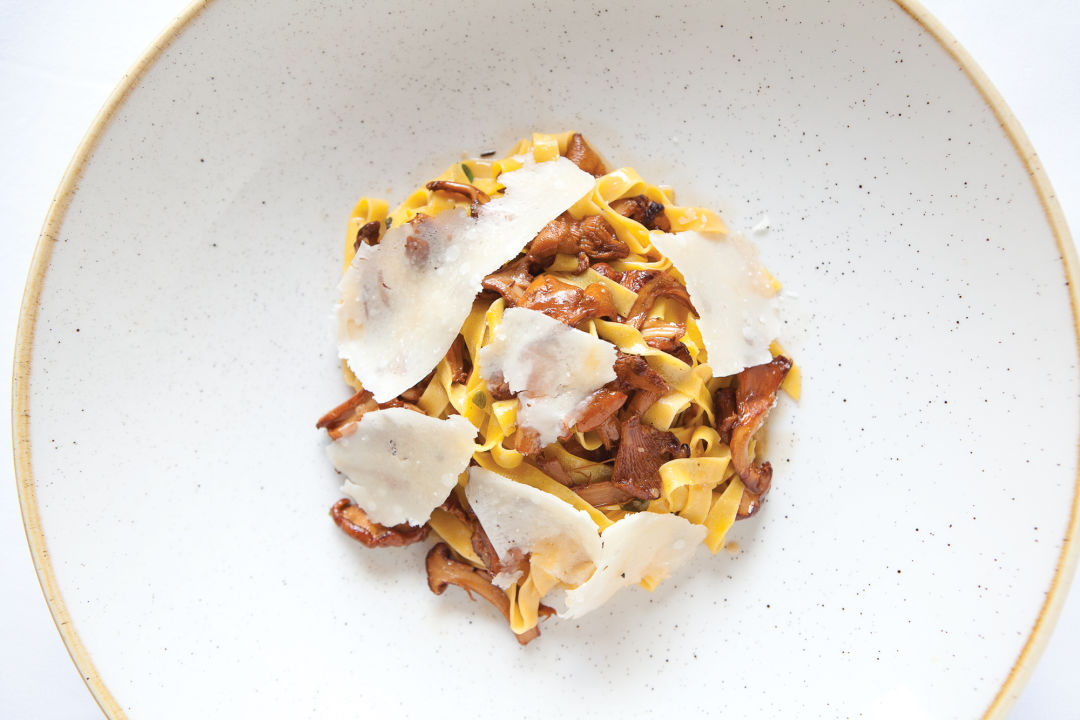
Kirkland has changed dramatically in the years since Holly Smith (Best Chef Northwest 2008) took over the fine dining landmark in 2000. While the Northwest-Italian ethos doesn’t waver, Cafe Juanita has evolved, too, with a renovation that made the dining room more comfortable and tasting menus tailored to omnivores, vegans, vegetarians, and pescatarians.
Canlis
- Northwest
- Queen Anne
- canlis.com
More than seven decades of history, hospitality, and unstoppable views from atop Queen Anne Hill cemented Canlis’s icon status long ago. That makes it about as classic as it gets around here—right down to the midcentury split-level architecture (Design Icon Award 2019), the dress code (jackets for some of the gents), the noblest mixed drinks in town, fathoms-deep wine list (Outstanding Wine Program 2017), and perfectionist standard of service. Because the third generation of Canlis family restaurateurs insist on culinary relevance, the food is always evolving. Even though chef Brady Williams (Best Chef Northwest 2019) is long gone, both the warhorses (yes, the Canlis salad) and the more experimental, rigorously Northwest multicourse dinners remain nightly fare.
Dahlia Bakery
- Bakery/Pastry Shop
- Denny Regrade
- tomdouglas.com
Chef Tom Douglas’s (Best Chef Northwest 1994) Dahlia Lounge changed so much: Seafood wasn’t just served, it was revered. The skilled irreverence in the kitchen made for the kind of brazen pairings that would later be called fusion—and helped pave the way for the recent upmarket embrace of doughnuts and cupcakes, thanks to the coconut cream pie. Though Dahlia Lounge is gone, Tom Douglas restaurants’ legendary Triple Coconut Cream Pie lives on at the Dahlia Bakery (along with a steady stream of artisan-baked bread, pastries, and sandwiches flowing for breakfast and lunch). Meanwhile, Douglas’s seafood style has evolved with the times, and is now on display at Mr. Fish and Half Shell in the Pike Place Market.
Emmett Watson’s Oyster Bar
- Seafood, Oyster Bar
- Pike Place Market
- facebook.com
Curmudgeonly Seattle journalist Emmett Watson was the original co-owner of this hidden Pike Place Market cranny lined with sky-blue booths (America’s Classic, 1998). The menu, written on the back of a paper bag, often just said, “Raw Oysters.” When Brian Trask, a member of the Oglala Lakota, bought the bar in 2024, he kept many things the same—but started sourcing his seafood from local Indigenous tribes. Though the menu is now printed, the oysters still come simply, with a lemon wedge or two, and a wee plastic thimble of cocktail sauce. Maybe parsley, if you’re lucky. Broiled oysters are a specialty, but the basket of fried shrimp and french fries will not disappoint. Nor will the cute courtyard.
FareStart
- American/New American
- Denny Regrade
- farestart.org
Proof aplenty of the old adage: Give a man a fish and feed him for a day; teach a man to make a fish sandwich and feed his customers really, really well. FareStart (Humanitarian of the Year 2011), the nonprofit that trains homeless women and men in food-service jobs, operates from a lofty blond-wood and raw-raftered room where, on weekdays it’s a lunch-only menu full of big flavors, including the aforementioned feisty fish sandwich—blackened steelhead with lemon-caper aioli, that is. On Thursdays it’s open for dinner, when an impressive roster of guest chefs donate their time to empower students and wow diners. Either meal, it’s worth a peek through the window into the kitchen, where you’ll see opportunity cookin’.
Los Hernández Tamales
- Mexican
- Eastern Washington
- facebook.com
A humble tamale shop just south of Yakima, Los Hernández (America’s Classic 2018) sits in a white cinderblock building surrounded by auto dealers. Pork tamales are a bestseller year-round, but in late spring the staff, mostly family, moves into a higher gear for their seasonal signature, fresh local asparagus and sharp pepper jack cheese wrapped in homemade masa. Even with a second location in rapidly expanding Yakima, the asparagus version faces occasional sellouts, though the shop makes them through August. Score two hot with beans and rice—and maybe a chilled Jarritos in a glass bottle—for a meal on tables draped in plastic tablecloths, a simple idea perfectly executed with warmth and flavor. Then add a dozen frozen to go.
The Lakehouse
- Northwest, American/New American
- Bellevue
- thelakehousebellevue.com
Though the exceedingly sharp dining room, decked with white leather, industrial black trestles, and hip floral wallpaper fits its tony Bellevue Collection location, the menu retains the ethos that won Jason Wilson his award (Best Chef Northwest 2010, for Crush). It prioritizes seasonal vegetables and smart takes on homey dishes like pork chops, pasta, or Caesar salad.
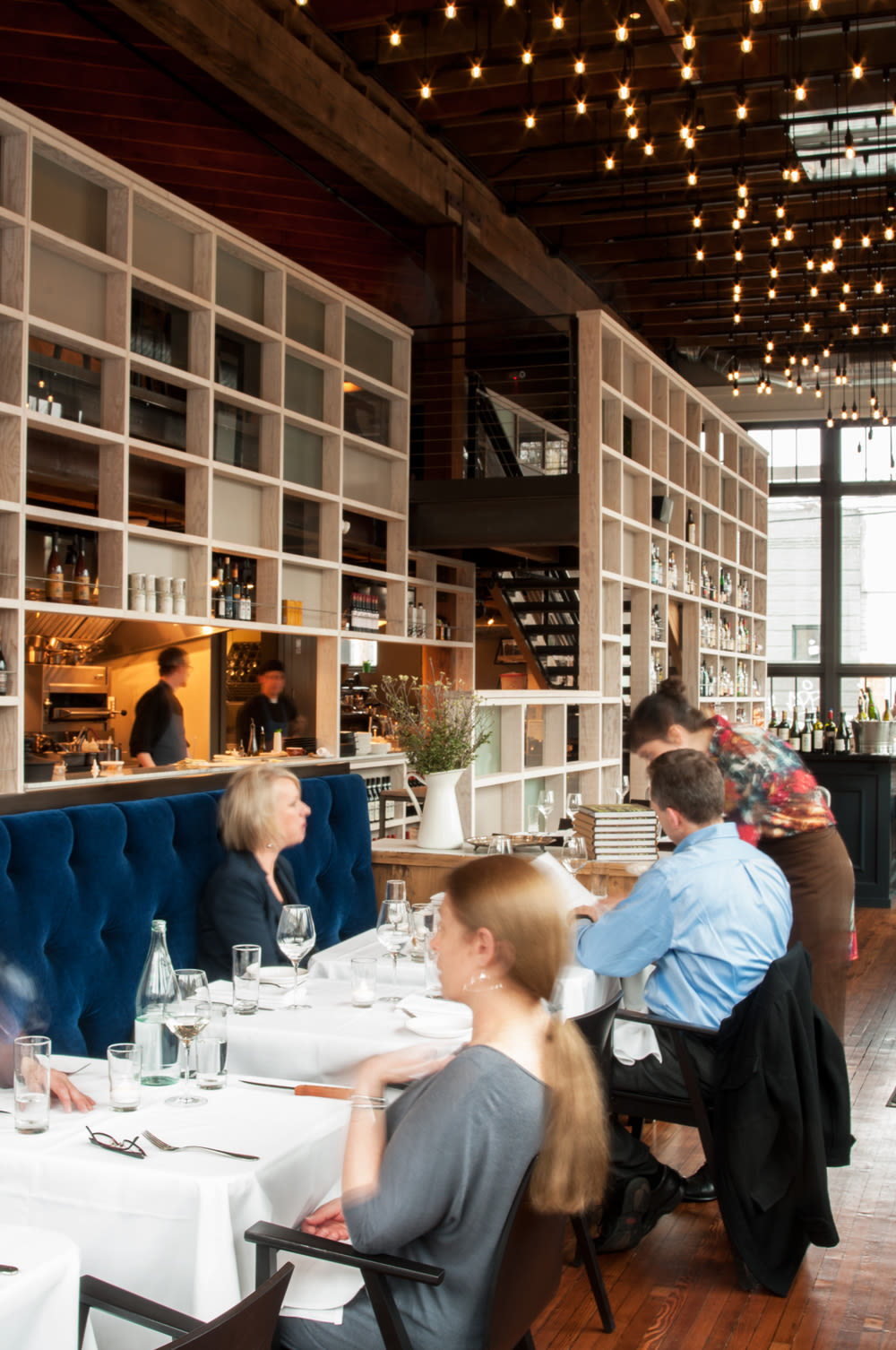
Image: Sara Marie D’Eugenio
Lark
- American/New American
- Capitol Hill
- larkseattle.com
John Sundstrom (Best Chef Northwest 2007) opened Lark as the upstart that pioneered small-plate dining; now, it’s the noble elder. Grownups come here for that disappearing species—relaxing high-end dinners—assembled either from small plates and a combination of mains and Sundstrom’s famous grains or with the four-course tasting menu. Meanwhile, the original Lark, just a few blocks away, houses Sundstrom and co.’s casual lunch spot, Slab Sandwich.
Maneki
- Japanese
- Chinatown–International District
- manekirestaurant.com
The crowd at this International District restaurant and bar often skews young, but in fact, it does not get more old-school in Seattle than the century-old Maneki (America’s Classic, 2008), a homey haunt of homely delights kept in line by a couple of no-nonsense aunties and traditional Japanese cooks. This legend could easily coast on lore alone, from surviving war and internment to the motherly order imposed by longtime stewards Jean Nakayama and Fusae “Mom” Yokoyama. It’s the food, however, driving the inevitable wait for a table. Regulars know to look to the whiteboard for exceptional daily specials, but then there are much-adored mainstays, like monkfish liver, sliced sashimi-style over shredded daikon with ponzu sauce.
Oriental Mart
- Filipino
- Pike Place Market
- facebook.com
Past tables of trinkets and souvenir knickknacks awaits a Filipino comfort food heaven (America’s Classic, 2020). Pancit noodles and braised chicken or pork adobos steam and simmer at the counter, but it’s the tangy tamarind sinigang soup of salmon collar and fresh vegetables that cement the lunch-only eatery as quintessential market dining. And while the fare may be comforting, a collage of hand-scrawled signs nod to Oriental Mart’s cutting sense of humor—“If you are reading this…who are you blocking?”
Ray’s Boathouse and Cafe
- American/New American
- Ballard
- rays.com
For over four decades, this dockside legend (America’s Classic, 2002) defined iconic Northwest dining, with its archetypal seafood menu, its record of pristine sourcing (Copper River salmon was practically invented here), its stunning wide-angle view over Shilshole Bay and the Olympic Mountains. The menu gussies up the mainly seafood preparations more than it once did but fish is still cooked with appropriate restraint, and the desserts are terrific. Upstairs is Ray’s Cafe, home of an even better view and a breezy deck.
Rupee Bar
- Indian
- Ballard
- rupeebar.com
Before it sprang to life in a narrow slot of a fir-timbered old Ballard building, Rupee Bar (Outstanding Restaurant Design, 75 Seats and Under, 2020) lived mostly in the mind of co-owner Rachel Johnson. Decades had passed since she traveled throughout Sri Lanka, but its flavors stayed with her. And (weirdly, regrettably) nobody in Seattle was cooking Sri Lankan. Not in stylized rooms where Swedish light fixtures illuminate walnut casework and a ribbon of tweezered mustard seeds garnishes the pumpkin curry. Maybe that’s why this minuscule deep-blue drinking den found such a welcoming crowd in Seattle, both among transplants grateful for Rupee’s take on the mutton roll, Sri Lanka’s national dish, and a neighboring four-top unsure what mutton even is. Or, perhaps, it is the unique cocktail program, crossing Sri Lankan spices with beach vibes—tiki on a South Asian detour.
Tomo
- Asian Fusion
- White Center
- tomoseattle.com
At Canlis, where Brady Ishiwata Williams won his 2019 award for Best Chef Northwest, he famously balanced a menu pitched toward both legacy diners and newcomers. His own restaurant is more declarative. Tomo presents fine dining–caliber tasting menus that distill each season’s progression of flavors into delicate, often sweet-savory experimentations, served sans tablecloths, at a very reasonable price point. The wine list is adventurous and the kitchen’s creativity dynamic; bolstering the laid back vibes.
Terra Plata
- Small Plates
- Capitol Hill
- terraplata.com
Into the skinny, window-lined point of Melrose Market one of Seattle’s finest chefs, the late Tamara Murphy (Best Chef Northwest 1995, for Cafe Campagne), tucked a more rustic, more casual, and more global chaser to her wonderful Brasa. At wood tables, on the rooftop patio, or the warm triangular bar, a broad demographic of diners still taste her legacy as they nibble off small plates of spot prawns in chimichurri or velvety charcuterie, or order among meat, seafood, or veggie plates.
The Walrus and the Carpenter
- Small Plates, Oyster Bar
- Ballard
- thewalrusbar.com
Renee Erickson won (Best Chef Northwest 2016) for the bygone The Whale Wins, but the closest thing around is her merrily jostling oyster bar on Ballard Ave, still a classic for showing visitors what Seattle is capable of. Not that you need a houseguest to justify a night of classic Renee-style: meticulously sourced oysters, octopus carpaccio, and food-simpatico cocktails beneath the glow of an enormous coral reef of a chandelier. Since her 2016 win, she’s also imbued Westward with her style, as well as opened Lioness, Jeffry’s, and Mio Oh Mio.
Wild Ginger
- Pan Asian
- Downtown Seattle
- wildginger.net
All three locations are enormous, and they better be, since they’re required to seat the zillions who come for its long-held reputation. The cosmopolitan pan-Asian purview carries on, encompassing and mastering specialties from Beijing to Bangkok—fragrant duck with steamed buns and plum sauce, Szechuan green beans wizened to perfection, seven-flavor beef (where you can taste all seven!), a slew of pungent soups, originally translated by Wild Ginger’s original chef, Jeem Han Lock (Best Chef Northwest 1997).
Filed under