



Called Rakurai, the counter-uncrewed aerial system (C-UAS) can disrupt multiple radio frequencies (RF) simultaneously, thanks to custom-designed chips and antennas that overcome the weight and power limitations of existing handheld systems.
As Ukraine’s response to Russia’s invasion demonstrated, drones are now a key battlefield weapon. Drone countermeasures are also an important defence.
The Sydney deep-tech startup says most existing counter-drone systems use off-the-shelf radio frequency components, limiting their weight, power consumption and the frequencies they can target.
Rakurai is designed to be light enough for individual soldiers and security personnel to carry, rather than relying fixed or vehicle-mounted equipment. It can transmit across widely separated frequency bands simultaneously, to make it harder for drones to maintain communications when individual frequencies are jammed or degraded.
Millibeam founder and CEO Venkata Gutta said Australia has an opportunity to develop sovereign RF capability.
“Every autonomous and defence system currently depends on architecture designed for a different era. Australia has a narrow window to own that foundation rather than import it,” he said.
“Designing from the chip up, here in Australia, is how we field sovereign capability at the speed and scale the National Defence Strategy demands.”
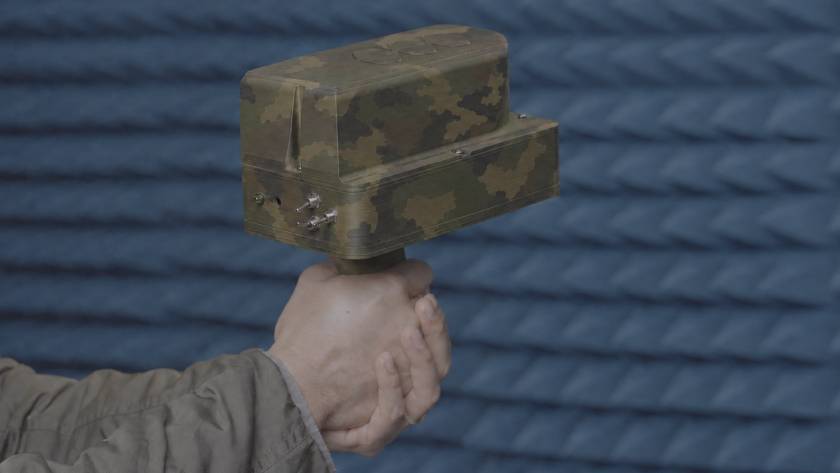
Rakurai, for now, is a prototype rather than battlefield-ready product. Gutta says it has reached Technology Readiness Level 5, meaning it’s that after initial demonstrations, they’re now preparing for field testing.
The startup scored $4.6 million in federal government grants to develop technology underpinning Rakurai, including $2.6 million through the Industry Growth Program and $2 million from the Supply Chain Resilience Initiative for next-generation semiconductor chipsets.
Main Sequence partner Mike Nicholls said designing the chips, antennas and broader RF architecture together allowed Millibeam to push beyond the limitations of conventional counter-drone systems.
“Every counter-drone system on the market today is built by bolting together off-the-shelf parts – and that ceiling is exactly what’s letting drone threats outpace our defences,” he said.
“To deliver the performance needed to put this capability in the hands of individual warfighters and security teams, the Millibeam team had to design and match the entire RF architecture from the ground up, including the chips and the antennas.
“That’s the kind of sovereign capability we back: hard technology, deep IP, and a founder who’s proven – across 15 tape-outs – that he can ship high-performance silicon and systems. Rakurai gives Australia a foundation that can keep pace as drone threats evolve.
Millibeam’s tech is targeting Defence’s growing focus on locally developed counter-drone capability, including requirements outlined in Project Land 156 and the broader 2026 National Defence Strategy, which prioritise sovereign C-UAS capability to protect the ADF and domestic critical infrastructure against drone threats.