



In 2005, Jennifer Comfort was a new mom who wanted some exercise. She joined a gym, where she met a fellow Jen who had just done a triathlon. Comfort had no idea what that meant—it’s a sporting event with a swim, bike, and run component—but she signed up for one anyway. “I doggy-paddled the swim, and I borrowed a bike from a friend’s garage,” she remembers. “I was pretty terrible, but I was absolutely hooked.”
Twenty-one years later, she’s still at it—and now she helps others get into the sport. “I like how dynamic it is, trying to train and race and mold all three of these sports into one coherent performance,” she says. Comfort is coaching about 20 athletes for the IRONMAN 70.3 Washington Tri-Cities on Sept. 20, which involves a 1.2-mile downriver swim in the Columbia River, a 56-mile rolling bike ride through scenic wine country, and a flat 13.1-mile run along paved trails, finishing at Columbia Point Park. The spectator-friendly ending, packed with enthusiastic volunteers at frequent aid stations, is a particular favorite—in the global 2025 IRONMAN Athletes’ Choice Awards, Tri-Cities won for best overall run course.
“This race showcases our corner of southeastern Washington really well,” says Comfort, who lives in Pasco.
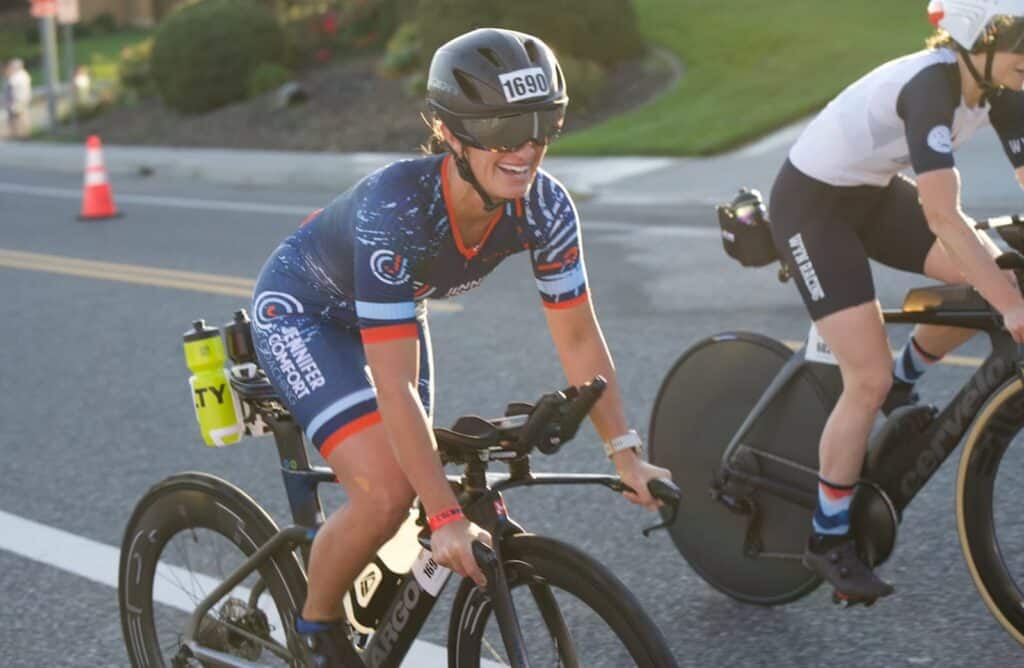
Jennifer Comfort got into triathlon 21 years ago and is coaching about 20 athletes for this year’s IRONMAN 70.3 Washington Tri-Cities.
Courtesy of Jennifer Comfort
Through triathlon, Comfort has found community, challenge, and the chance to connect with nature. “I feel most at home outside,” she says, “and triathlon is an avenue to express that on a daily basis, sometimes twice a day.”
Indeed, the training schedule can be grueling, especially for a race this long. Comfort believes the mental fortitude and strength her athletes forge serve them well in other areas of their lives, from their careers to showing up for their families.
Kennewick-based Chris Littrell knows well that the benefits of endurance sports go beyond the physical. He was a runner in his youth and continued running while serving in the U.S. Air Force. Family and work obligations kept him away from training for a decade-plus until 2024, after he was diagnosed with PTSD related to his career in law enforcement, where he especially struggled with calls involving child crimes and death scenes. He knew exercise was going to need to be part of his path forward, but getting to the gym consistently proved difficult after his initial enthusiasm waned. “How am I going to do something around physical fitness that’s going to contribute to healing my brain and body?” he asked himself.
Littrell decided to sign up for a half-marathon, which reignited his love of endurance running. From there, a friend who was organizing a team for the inaugural IRONMAN 70.3 in the Tri-Cities contacted him because the team’s runner was injured. Littrell had recently lost his oldest daughter, Danielle, in a traffic collision in Spokane, so he decided to race in her honor and was blown away by the experience. “When I lost my career, if you will, there was a piece of me mourning the loss of team,” he says. “September 21, 2024, was a magical day for me. I had never been part of a race that was that big. The Richland residents were amazing. It was a mountaintop experience.” After the race, he looked at his wife and said, “It was such an amazing experience, but I don’t think I can do the whole thing.” Her response? “I know exactly what you’re going to do next year.”
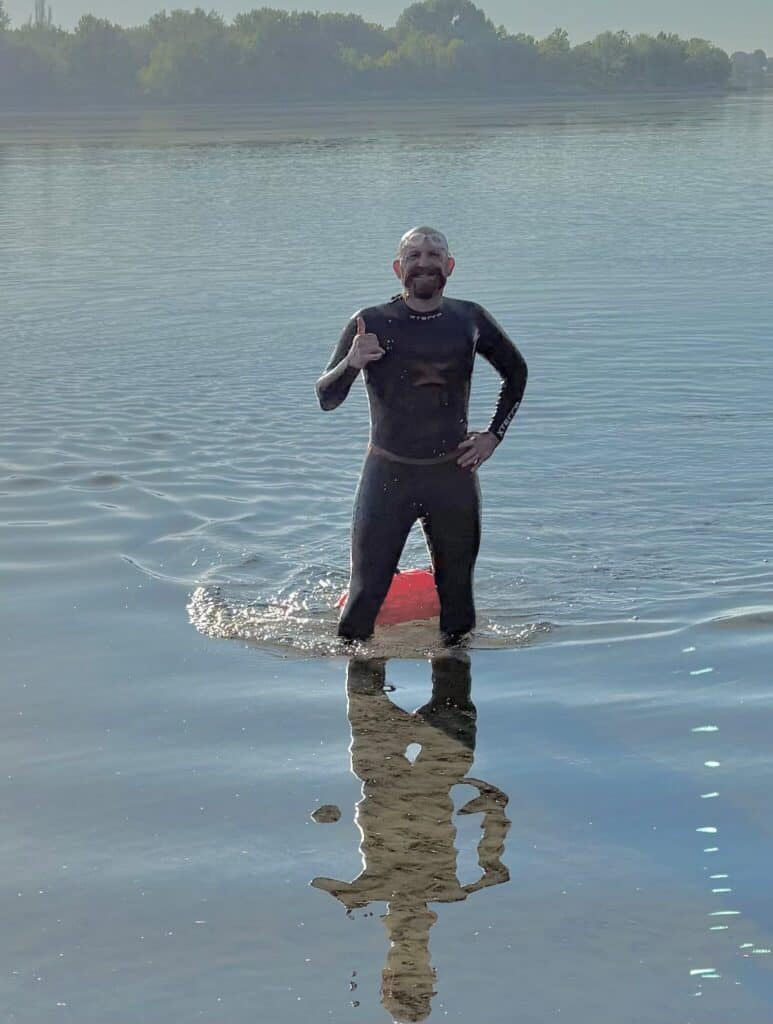
Chris Littrell competes in IRONMAN, an endurance race he credits with helping him heal and reconnect with a sense of community.
Courtesy of Chris Littrel
His wife was right, and Littrell trained to do all three disciplines of the triathlon, jumping into a whole slew of races in 2025. He’d planned to race this year’s IRONMAN 70.3, but an ankle injury cut his season short. Given the immense benefits he’s found through competing, he looks forward to returning as soon as he can.
“The 70.3 race, because of the duration—I’m out there for roughly six hours—it strips down all of the barriers you’ve got going on in life. It strips down your ego. If you’ve been holding back any emotional stuff, it strips all of that down,” he says. “I have been out on the courses just weeping, particularly over the loss of my girl. It creates an opportunity to tap into some pieces of myself that I don’t always get to tap into, because of all the psychological defense mechanisms we put up in life.”
When Comfort and her crew hit the course in late September, they’ll be among more than 2,000 athletes, all with their own stories. Amid the picturesque surroundings, in addition to testing their physical fitness, they’ll also be pushing the limits—and reaping the rewards—mentally and emotionally.
“Triathlon has been a piece of that PTSD healing, both from the standpoint of the way I fill my time and, biologically speaking, it has healed my emotional regulation,” Littrell says. “It affects the type of dad that I am, the husband that I am, and the friend that I am. This is the thing I’ve found that offers all of those physical benefits and helps me continue to show up as a better person.”