



World Cup 26 has brought Seattle plenty of noise: marches to the stadium, packed watch parties, and fans from Australia, Egypt, Bosnia and Herzegovina, and across the United States. Amid the flags and football frenzy, another kind of welcome is taking shape, a consistent thread honoring the Indigenous heritage of this city and state.
During the tournament, six matches are being held on the lands of Coast Salish peoples, who have lived here for thousands of years. And for the first time, Native nations are playing visible roles in official host-city ceremonies and events.
The Puyallup Tribe of Indians has made history as the first Indigenous nation to officially partner with a FIFA World Cup host city. The role grew from a partnership between Sounders FC and the Puyallup Tribe, launched in 2021. Throughout World Cup 26, the Puyallup Tribe is Seattle’s Official Legacy Supporter, bringing language, culture, and heritage from the Puyallup and other Coast Salish tribes into the tournament. So what exactly does this look like?
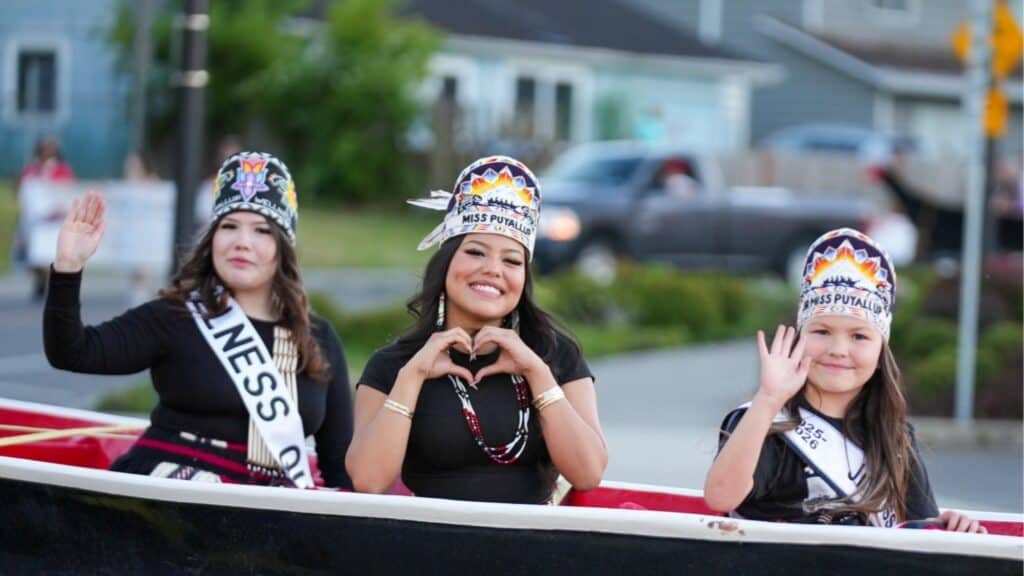
If you’ve been around town recently, you’ve likely noticed the FIFA World Cup welcome signs, transit directions, and cultural hubs aren’t just written in English. Signs also feature Lushootseed (dxʷləšúcid), an Indigenous language of the greater Seattle area, spoken by Coast Salish tribes. The bilingual signs have been greeting football fans arriving at Seattle-Tacoma International Airport and using public transit hubs like light rail stations. Once spoken widely across a thirteen-tribe region stretching from Olympia to the Salish Sea to the Skagit Basin, Lushootseed is now critically endangered.
The last fluent native speaker passed away in 2008, but efforts to preserve the language have been underway for decades. Signs around the Puyallup Reservation in Tacoma are being changed to include Lushootseed, with plans to gradually expand signs reflecting the Indigenous Salish language across the wider Seattle-Tacoma area. Fans can purchase a Sounders Salish Sea scarf reading “Water is sacred” in English and Lushootseed.
Amy McFarland, the Puyallup Tribe of Indians’ World Cup project director, notes the language wasn’t visible when she was growing up, but that’s set to change. “The goal is not just to revitalize it but to make it visible to the younger generation—not something of the past but of the present.” She recalls a group of young women leading events in Lushootseed all on their own. They started learning the language with her as sixth graders. And while only a piece of the revitalization effort, centering Lushootseed in World Cup programming and events is an important part of preserving our region’s Indigenous language.
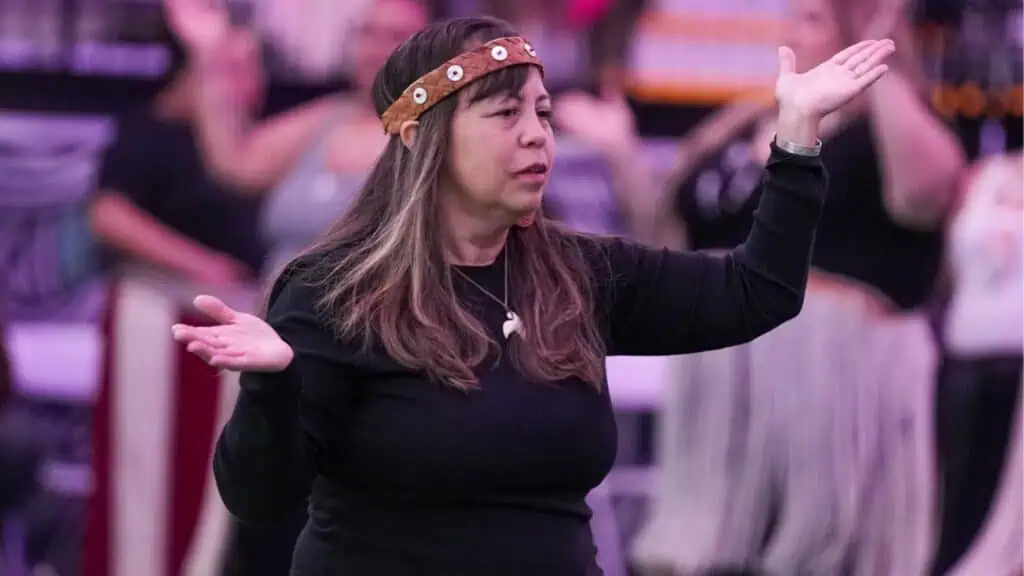
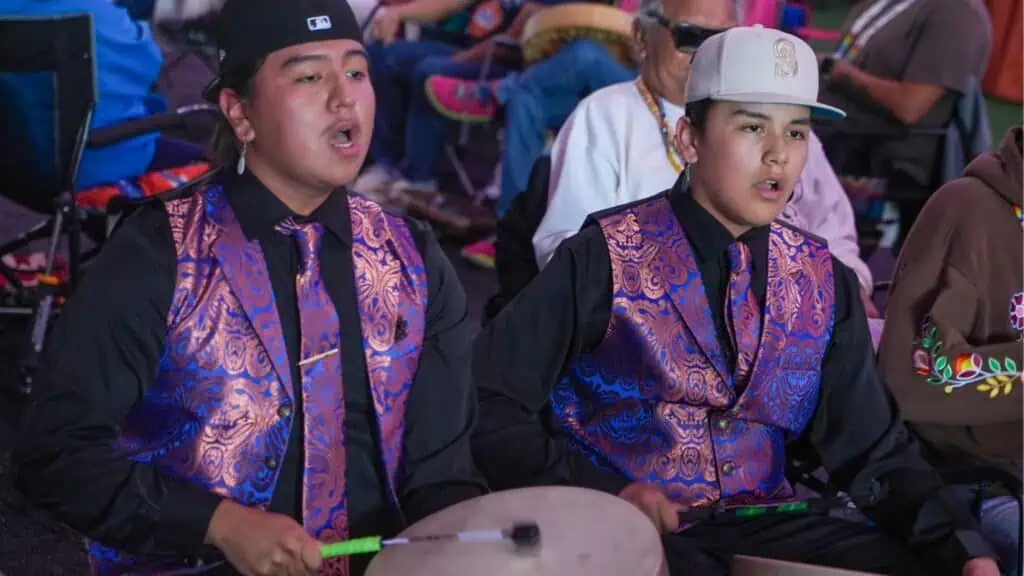
Participants take part in the stick game tournament, a traditional Coast Salish game accompanied by singing and drumming.
Courtesy of Puyallup Tribe
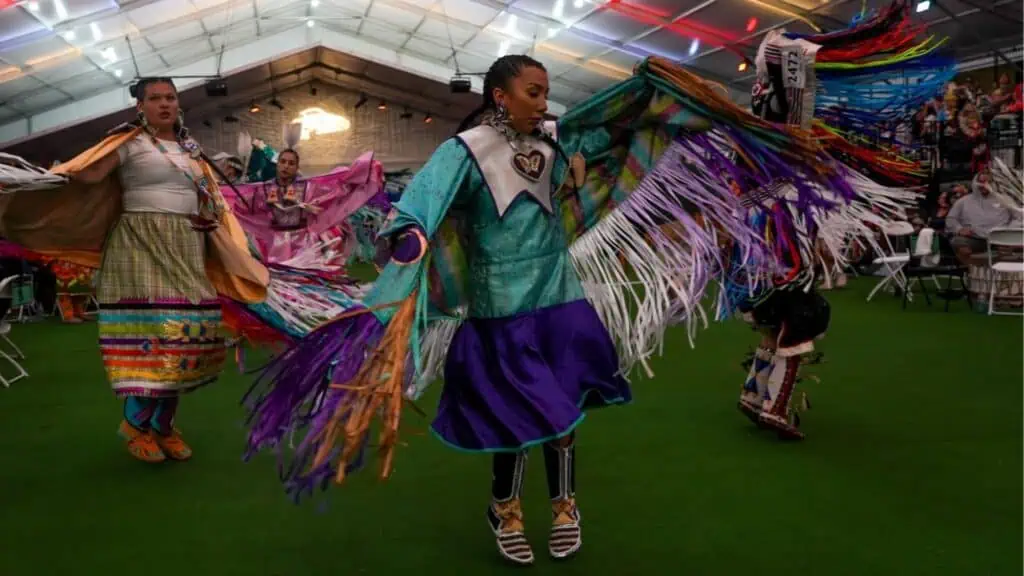
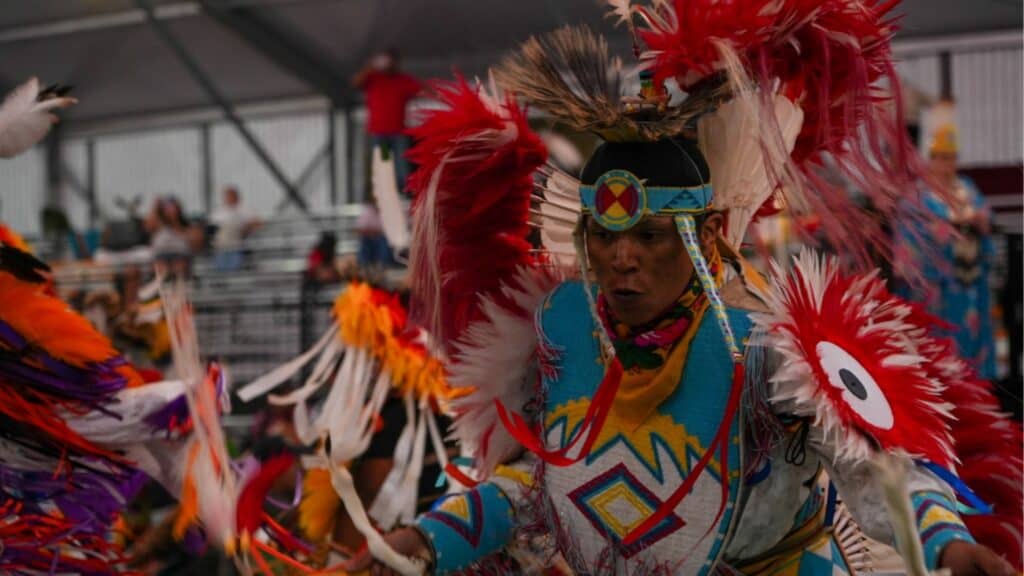
Dancers in regalia gather during the World Cup Powwow, part of the Puyallup Tribe’s World Cup 26 programming.
Courtesy of Puyallup Tribe
Beyond language, the Puyallup Tribe has been a central part of Seattle’s World Cup welcoming ceremonies and events. On June 12, the Puyallup Tribe kicked off the global tournament with a community parade in Tacoma, culminating at Tribal headquarters with a traditional opening ceremony and Lushootseed narrative. As a symbolic celebration of the arrival of visiting nations, tribes hosted a Coastal Protocol on June 18, inviting visitors to learn about local Native American heritage. The generations-old event honors, shares, and builds relationships between Tribal nations and visiting guests. The following day, a three-day World Cup Powwow unfolded in Tacoma, bringing together Native Americans from across the country to celebrate living Native culture through intertribal dances, singing, and regalia. Foods such as fry bread, smoked salmon, and huckleberry juice were available to sample.
In advance of the World Cup, a Puyallup Tribe artisan crafted 40 wooden paddles carved with Seattle’s FIFA World Cup logo (a whale tail emerging from waves against Mount Rainier and the city skyline) to gift during the tournament. The longstanding Salish welcoming tradition is infused with honor and respect. McFarland notes it’s traditional to invite people to events in person and that paddles are often used in the invitation process.
The Puyallup Tribe is also hosting an official fan zone throughout the tournament, open during Seattle matches. The Puyallup fan zone features large screens for live game viewings, cultural sharing by Tribal artists, vendors and food trucks. At other official fan zones across the greater Seattle area, attendees can use audio kiosks to hear Lushootseed words and phrases. The SEA&WIN app, an interactive app designed to help visitors explore Seattle during the games, also teaches users Lushootseed words and phrases. There is also a scavenger hunt component that highlights Native heritage locations, including the Duwamish Longhouse and Cultural Center and Daybreak Star Indian Cultural Center.
Teams and spectators were invited to take part in the tribal Stick Game tournament from June 26-28. Traditionally used for entertainment, trade, and conflict resolution among Coast Salish communities, stick games are also accompanied by singing and dancing. On July 2-3, check out Kickin’ It Indi-City: An Indigenous Soccer Celebration. The event, hosted by the Native Action Network, is a two-day Indigenous soccer celebration and street festival featuring more than 30 Native artists, vendors, dance performances, and youth programming across several locations in Seattle. And for the World Cup final, the Duwamish Valley Sustainability Association will host a free watch party at Concord International Elementary School, with a morning football tournament followed by traditional cultural dances before kickoff.
After the last celebration of the World Cup fades, the goal is for this landmark partnership to live on. “When the tents go down, what is the legacy that we want to still be here?” McFarland says. “Legacy is what it’s all about. Language having exposure; our children watching it on TV and seeing that it’s not unusual.”
From a soccer pitch built on the Puyallup Reservation to deeper trust between the Native community and local governing bodies, centering Coast Salish peoples on the World Cup’s global stage is just the first step.
“This has allowed us an opportunity to be on a platform for the world, to share our language, our history, our culture as Puyallup people and Coastal tribes,” says McFarland.