



More than 30 years after he first started painting graffiti in Capitol Hill, artist Sam Sneke is back, this time with a much bigger canvas. His work is among five new murals that have appeared across the neighborhood, bringing together generations of Seattle artists whose connections to the area stretch back decades.
The murals are part of Paint the Block, a yearlong project organized by On the Block and the Seattle Artist Coalition for Equitable Development (Seattle ACED). Completed earlier this month, the project was funded in large part by the Seattle Office of Arts & Culture’s Hope Corps initiative, with an emphasis on Seattle’s graffiti and hip-hop communities.
Sneke’s Welcome to Capitol Hill stretches across a wall behind 1535 11th Ave., alongside Pine Legacy B, a vibrant mix of intricate graffiti lettering and colorful illustrations by SPECSWIZARD, BeSo 206, and Brandon “ArtbreakerBT” Thomas.
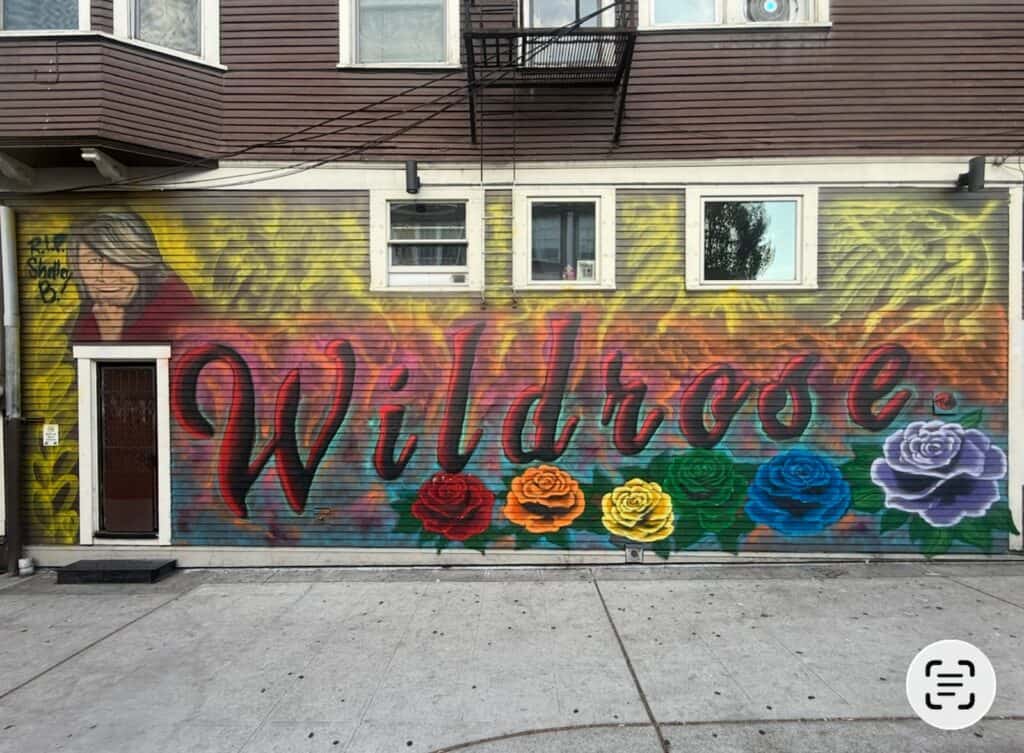
For Shelley, The Wildest Rose by Takiyah “TDUB” Ward.
Courtesy of On The Block
“I cut my teeth doing graffiti on Capitol Hill for 8 years in the early 90’s,” Sneke says. “… I am here to advocate for Graffiti as an artform, to celebrate style and a desire to elevate!”
Takiyah “TDUB” Ward’s For Shelley, The Wildest Rose features red lettering, a portrait, and a row of rainbow-colored roses on East Pike Street. The mural also honors people Ward has lost. Myron Curry contributed NW Liquor, while Gerardo Peña, known as Periko The Artist, has painted an enormous blue cat lounging among bright red flowers on Boylston Avenue.
“My mission extends beyond beauty, aiming to inspire and empower communities through impactful cultural art… symbolizing community identity and unity while giving voice to marginalized groups,” Curry says.
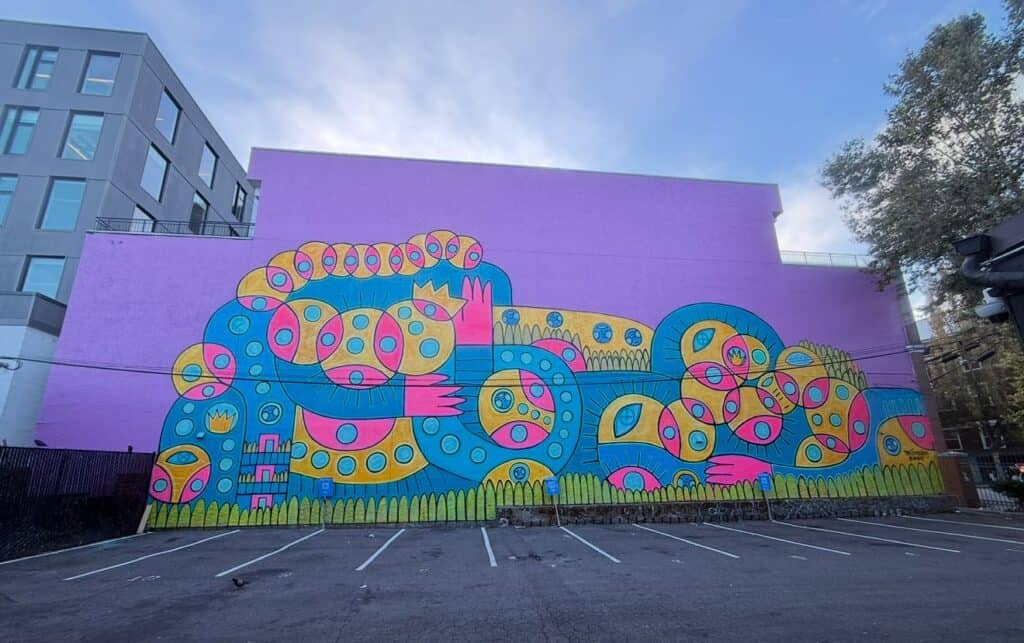
Time Traveling by Carolyn Hitt, supported by REESBO.
Courtesy of On The Block
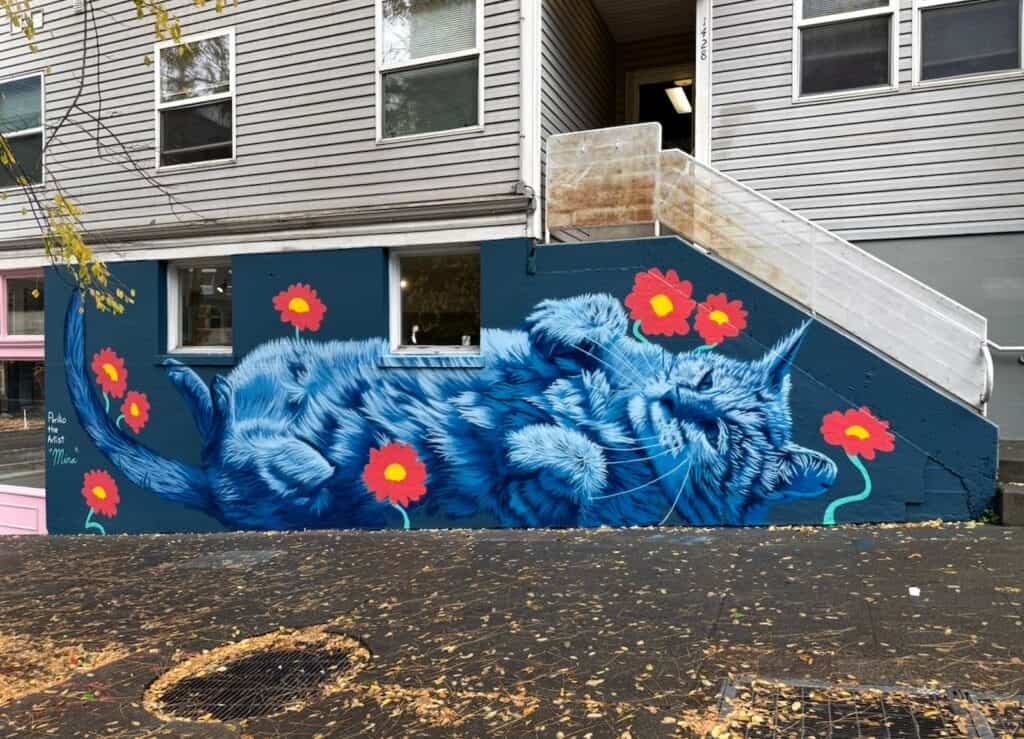
Untitled by Gerardo Peña.
Courtesy of On The Block
At 1016 E Pike St., artist and project curator Carolyn Hitt created Time Traveling, a swirling composition of blue, pink, and yellow against a purple background, with support from Maurice Kennedy, known as REESBO. Kennedy sees the project as a chance for Seattle artists to tell their stories in the very neighborhoods where they developed their craft.
“Being a part of Paint the Block and representing Seattle is an amazing experience,” Kennedy says. “It’s wild to think that our struggles, our stories, and our art can open doors for us to do some of the dopest things in the Northwest. What makes it even more special is that we got to do it in our own stomping grounds—Capitol Hill.”
That sense of ownership is central to the project. Hitt, who curated the murals with support from Julie Chang Schulman, known as Julie-C, wanted to bring attention to artists who have helped define Seattle’s street culture but don’t always have the resources or opportunities to sustain their work.
“The Seattle underground and behind the scenes is vibrant,” Hitt says. “More resources to these vital culture pockets would go a long way to nurture extraordinary talents that are currently struggling to create under the crushing weight of our economic times.”
It’s a familiar concern on Capitol Hill, where independent galleries, music venues, and gathering places have long been central to the neighborhood’s identity, and, as the area continues to change, projects like Paint the Block offer artists a visible presence in the streets and give the community another way to engage with their work.
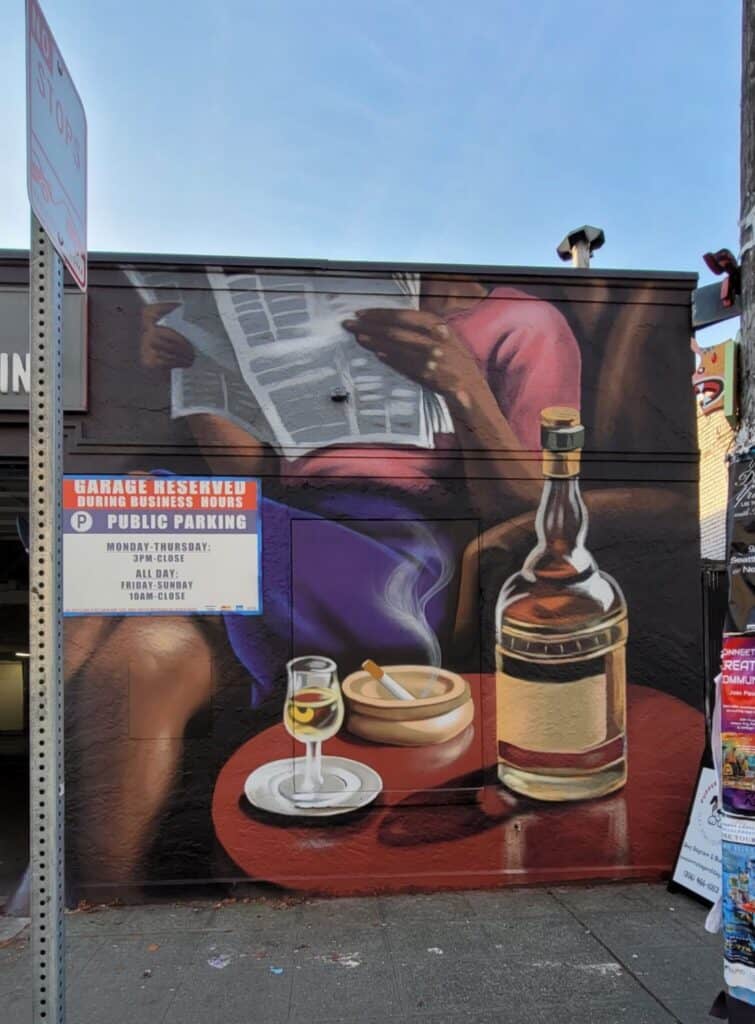
NW Liquor by Myron Curry.
Courtesy of On The Block
City Councilmember Joy Hollingsworth helped secure funding for the project, and Northwest Film Forum serves as its fiscal sponsor. For Diana Adams, owner of Vermillion Art Gallery & Bar, that investment matters well beyond the murals themselves. “Seattle’s DIY creative scene remains vibrant,” Adams says. “Having a deep personal tie as a neighborhood business owner, I value Capitol Hill’s tight-knit sense of community. Even through dramatic neighborhood shifts, maintaining accessible gathering spaces for both emerging and legacy creatives is essential to preserving the soul of our neighborhood.”
The organizers also see public art as a way to strengthen neighborhoods and improve public safety. Their approach draws on research exploring how community involvement and improvements to shared spaces can help reduce crime and build neighborhood connections. For Paint the Block, the idea is to make art part of a broader investment in Capitol Hill’s future.
There are plans to bring more people into the experience. The next phase includes a digital walking tour connecting eight sites tied to the neighborhood’s cultural history, followed by artist-led mural walks and events during Capitol Hill’s monthly art walk.
You can find all five murals around Capitol Hill’s Pike/Pine neighborhood, along East Pike Street, East Pine Street, Boylston Avenue, and 11th Avenue.