



If you were asked to envision what the world could look like in the future, you might take a page out of a dystopian book. But what about imagining a future that feels more hopeful, one where you have access to reliable transit, green spaces, and opportunities to gather in community with others? That’s exactly what Nivi Achanta, the CEO and founder of Soapbox Project, hopes to foster. Her nonprofit organization aims to build the world’s most joyful community spaces for climate and civic action.
As part of this work, Achanta hosts weekly gatherings in Seattle, which offer plant-based food, opportunities to mingle, shared activities, and a bite-sized action you can take before you leave. Themes for these gatherings have included everything from water resilience and housing justice to climate futurism, and attendees are encouraged to connect, learn, reflect, and take action.
Achanta shared more about how Soapbox Project has evolved since it started as a newsletter, why radical joy and community are central to climate justice work, and why imagination is a skill that you can develop with practice.
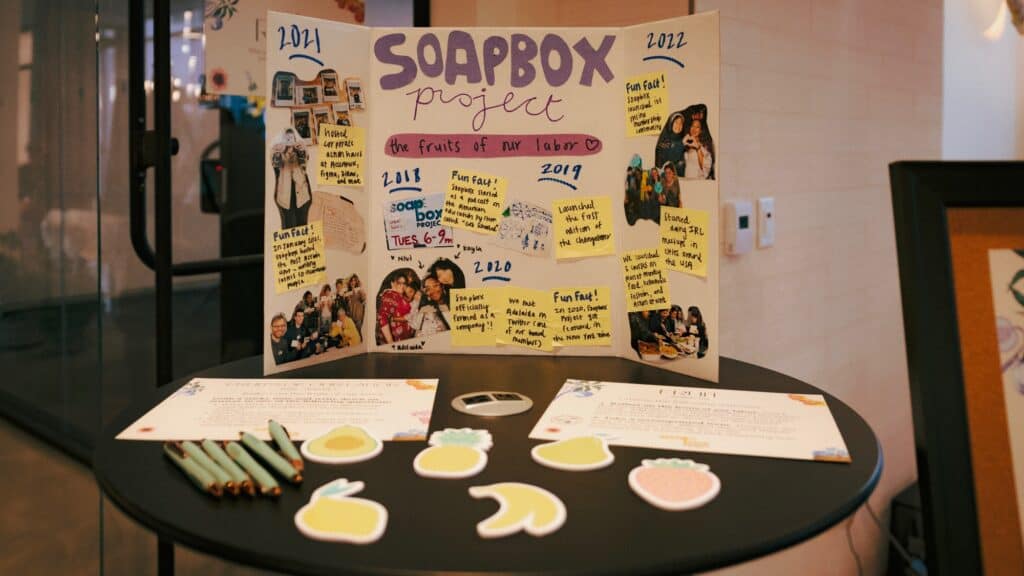
No background in climate activism is needed to join in—just an interest in making a difference.
Courtesy of Soapbox Project
This conversation has been edited for length and clarity.
Soapbox Project has evolved from a newsletter to a virtual community and now a weekly gathering. When you started it, you were working in management consulting. How did you pivot from that work to founding Soapbox Project?
I majored in economics and statistics, and toward the end of college, I started a chapter of Net Impact, a worldwide sustainability nonprofit. The teams I brought together were passionate about waste management, water management, and education, and I helped them form their projects, get funding, and have their projects implemented at the university. That’s when I realized I was good at organizing people and resources.
I had gotten a job offer at Accenture, and during the years working in San Francisco, my existential crisis got worse. One of the major turning points was when California experienced the most destructive wildfires on record and the town of Paradise, which is where my partner is from, was the epicenter. It was a horrible time, and the most jarring experience was going back to work just hours from where that fire was uncontained.
“People say that the antidote to despair is hope, but I think the antidote to despair is action.”
I emailed all the executives at Accenture and proposed that a team of consultants be sent to study community-led wildfire response, and they said yes. It taught me that anyone could make a difference, regardless of their experience or credentials. That planted the seeds for Soapbox and my goal of creating pathways for everyday people like me to go beyond their regular job and get involved in supporting climate justice.
How did you go from these disaster relief efforts to starting a newsletter, then a virtual community, then an in-person community?
I started this newsletter while at Accenture. I was talking to people who were the same age and career level, and every person shared the sentiment of wanting to do something to help but not knowing where to start. The newsletter was a way to answer the question, “What can we do about climate change?” I chose monthly topics, starting with fast fashion, and explored problems and solutions. Over time, it became clear that people didn’t just want information, but a community where they could discuss the challenges and emotions of it all. That’s why I started an online community, followed by an in-person community.
What is unique about Soapbox Project? Is it the focus on radical joy?
Sometimes, people will tell me that they’re not a climate person. I tell them that everyone who breathes air is a climate person, whatever that means to you. You don’t need to have a background in organizing and climate activism because every single person plays a part, and that’s where the ethos of Soapbox Project came from.
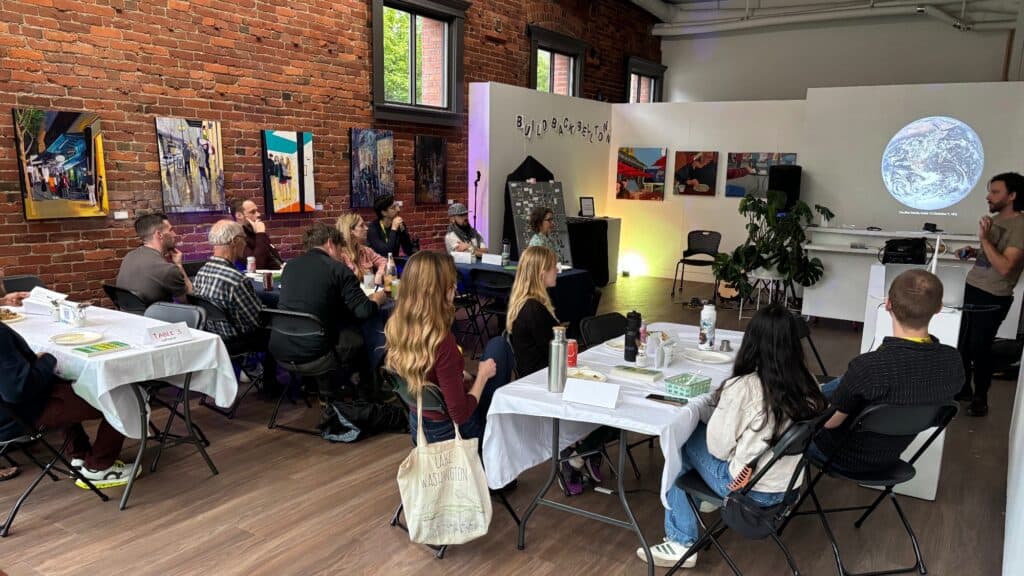
Soapbox Project’s weekly gatherings pair plant-based meals with conversation and action attendees can take before heading home.
Courtesy of Soapbox Project
I didn’t see a lot of pathways for beginners to step into the work, and Soapbox Project was meant to be a place that’s a connected, joyful, and vibrant space to gather, dinner included. I wanted to design something that people not only want to go to, but keep going to. If we’re thinking about the problem of our lifetime that’s going to get worse before it gets better, we need to match that problem with equally sustained focus from as many people as we can get.
Each month of programming and newsletter content centers on a theme. How do you choose what themes you want to cover?
I’ve been writing the newsletter since 2019, and some of the recurring themes are related to our basic needs like food, water, clothing, and shelter. We also add some more timely themes, like AI and climate as well as faith and sustainability, and explore them on a city or federal level.
We put a lot of thought into the conversations we want to have. People might feel inclined to talk about dystopia, so we structure the conversations around what people love about the city and what’s possible for the future we want. When discussing transit, we talked about how Mexico City closes its main road to cars on Sundays so people can walk and bike. The Seattle waterfront has been a great place for walking and biking, and it reminds people that change is possible and it’s not just about resisting bad things, but dreaming of great things.
With climate change getting worse, especially when you’re feeling its effects in the air you breathe, it can be difficult to stay hopeful. What helps you take action when you might feel powerless?
People say that the antidote to despair is hope, but I think the antidote to despair is action. When you show up, you feel more hopeful. That’s not to say that there aren’t hard days at Soapbox where we feel grief or sadness. But when I surround myself with people who are showing up on a regular basis, I don’t need to show up for the whole planet. I just need to show up for my community, including my friends and neighbors. These are the people who will not leave me stranded in a crisis.
Sometimes, it can be hard to dream of a reality you don’t have yet. How do you help people dream of a better future?
Dreaming is a skill, and like any other skill, you need to practice it. Our dream sessions focus on this once a month, and occasionally, I’ll give people an imagination prompt for 100 years from now. This helps people wish for whatever they want, especially when you remember that the world was completely different 100 years ago. At Soapbox, we push people to imagine beyond the constraints of what seems possible.
For someone who’s not in Seattle or can’t attend a Soapbox Project event, what are some ways to take action every day?
Soapbox has been doing pop-ups across the country to see where we can go next. Beyond that, we have the Changeletter newsletter, which is a free, bite-sized avenue for people to plug in. I also remind people that your bank account is one of the most important levers of change. You can use tools like Mighty Deposits to look up what a bank is doing with its money, and explore switching to a climate-friendly bank or a bank that supports causes you care about.
“Do things that help you connect with your community in the world outside, whether it’s gardening, biking, or taking transit so you can experience the city. When you love a place, you’re going to want to protect it.”
There are other things that you can do, such as drive less, fly less, eat less meat (especially beef), and compost. It’s also important to know who represents you in government because your city council can affect many things in your daily life. Stay connected to your city councilmember by emailing them or attending office hours. When you have something you need solved, like adding a stop sign, they will be more likely to respond to you.
And lastly, do things that help you connect with your community in the world outside, whether it’s gardening, biking, or taking transit so you can experience the city. When you love a place, you’re going to want to protect it.
What are some ways to support Soapbox?
To get involved, show up to Soapbox Project every Tuesday and come back and bring friends. There’s a chef-in-residence who works with regenerative farmers, and she is a cornerstone of Soapbox and cooks something seasonal every week. Our annual gala with the theme of Earth Magic will be on Sept. 25, and it’s a showcase of the vibes we have at Soapbox.
Donating is a big part of every nonprofit. There’s a lot of focus on direct relief, and that’s so important, but we also have to invest in places like Soapbox and other organizations.
The best thing you can do is stay engaged, talk with your friends and family about how to get involved, and practice your imagination skills. Soapbox is here for anyone who believes that there needs to be more joy and connection in the times we’re in right now.