



Jo Cosme knows how seductive a postcard can be.
The Seattle-based Boricua (Puerto Rican) multimedia artist works across photography, installation, video, sound, and interactive elements to examine and pull apart how Puerto Rico is seen, sold, and misunderstood from the outside. Trained in photojournalism, with a BFA in photography from Puerto Rico School of Fine Arts, Cosme brings that eye to art that questions how images shape what people think they know. Her work uses that tension to contrast the island’s romanticized image as a Caribbean paradise with the realities of colonialism, displacement, exploitation, memory, and home.
Originally from Caimito, Puerto Rico, Cosme was displaced to Seattle a year after Hurricane María devastated the island in 2017. The move meant starting over in the United States while navigating culture shock and the complicated reality of living in the country that has long exploited her homeland. It also made clear how little many people here understand about Puerto Rico beyond the version sold to visitors.
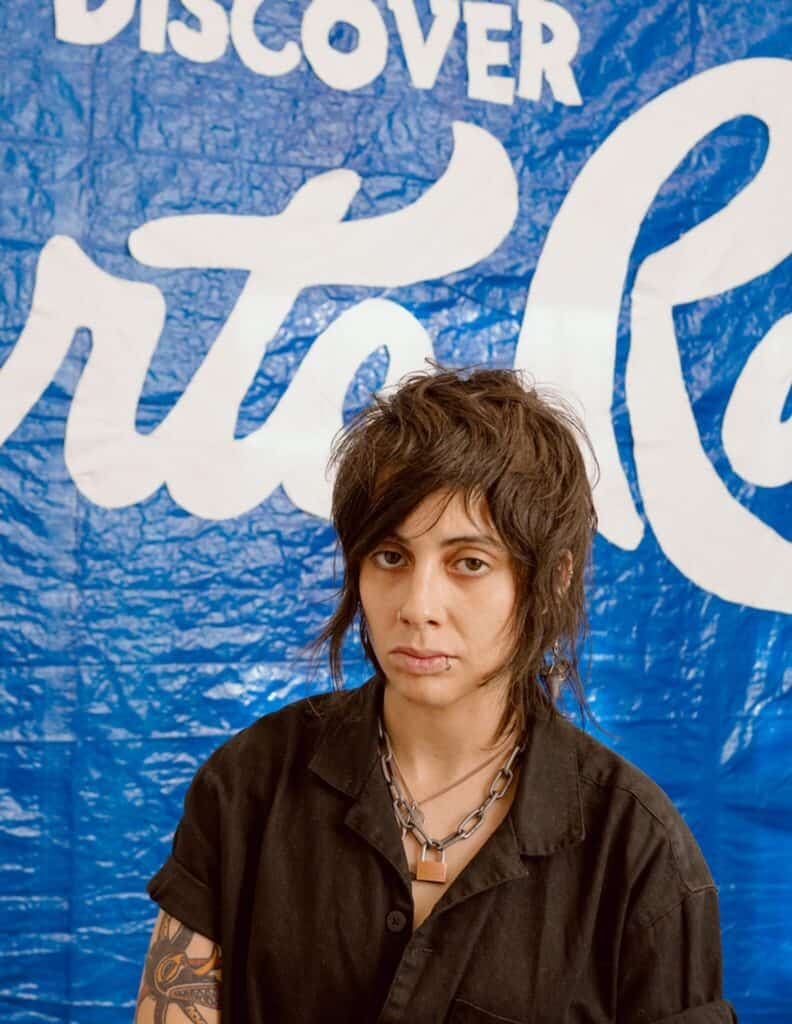
That experience runs through her ongoing project, Welcome to Paradise: ¡Viva Puerto Rico Libre!, which continues to grow in scale and form. Cosme says she is developing the work for a solo exhibition at the National Museum of Puerto Rican Arts & Culture, with the goal of turning it into a traveling exhibition. In her artist statement, she calls the project “an invitation to unlearn the fantasy of paradise and to hear, instead, the voices of a People who have never stopped fighting for their future.”
Cosme’s work is part of Agents of Change, celebrating the finalists of the 2026 Neddy Artist Award. Funded by the Behnke Foundation in honor of the life and work of Seattle painter and teacher Robert E. [Ned] Behnke, the Neddy is the longest-running annual award program for visual artists in Washington. Cosme won this year’s open medium category, one of two top awards that come with $30,000 prizes in honor of the program’s 30th anniversary. Sangram Majumdar won in painting.
Hometown:
Caimito, Puerto Rico.
Discipline:
Multimedia artist working across photography, installation, video, sound, and interactive work.
Favorite Spot in Seattle:
Beacon Hill’s Shell Gas Station because of the catfish.
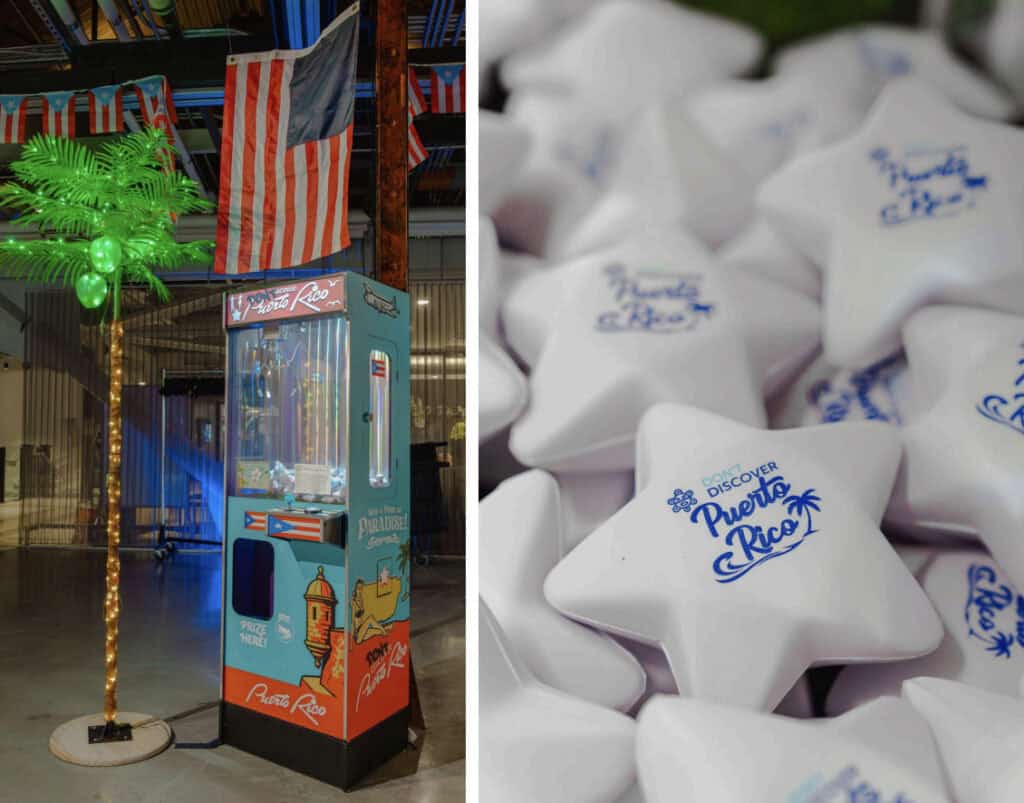
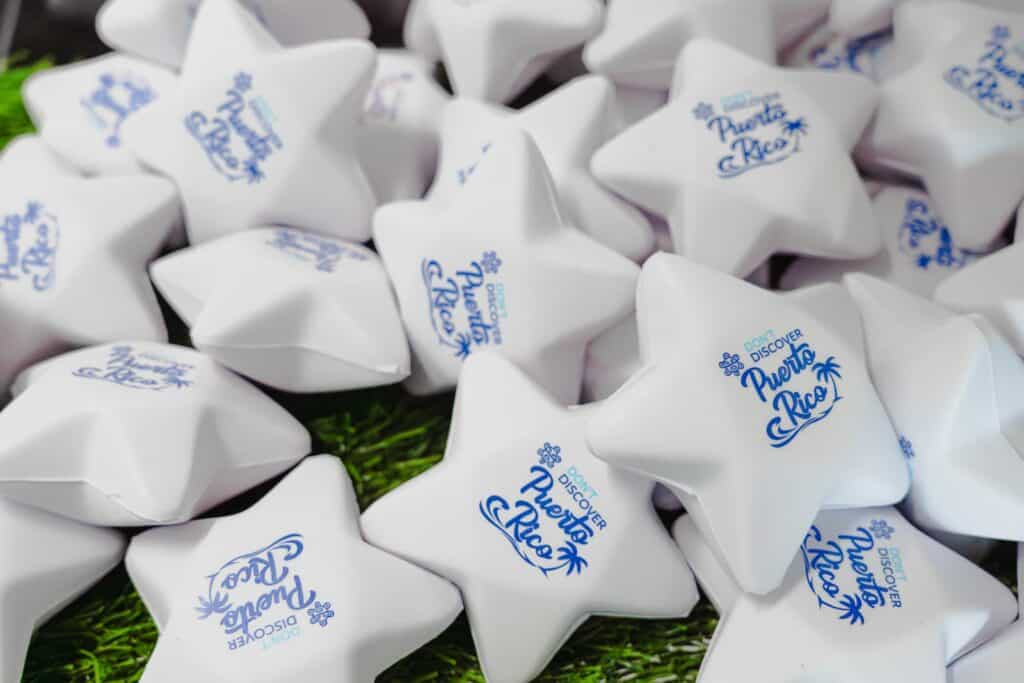
Jo Cosme, Caimito, PR (b. 1988) Win a Piece of Paradise!, 2025. Digital design on vinyl, plastic, aluminum, fabric and rubber. 10’ x 22” x 23”. Win a Piece of Paradise! takes the form of a claw machine wrapped in postcard imagery. A painted “DON’T” interrupts the phrase “Discover Puerto Rico.” Inside, souvenir stars reference the ways Puerto Rico and the Caribbean are marketed, sold, and consumed as paradise. What begins as a game becomes a reflection on who benefits from that fantasy.
Courtesy of the artist
Describe Your Work in Three Words.
Immersive. Confrontational. Layered.
When did you know you wanted to be an artist?
Honestly, pretty early. I was always drawn to image-making and storytelling, but I think it became real once I realized art could create dialogue, challenge systems, and hold emotional weight at the same time.
Where do you find inspiration?
A lot of my inspiration comes from my own experience growing up in Puerto Rico and later leaving after Hurricane María. Living through displacement changed the way I think about home, memory, and the way the island is seen from the outside. I’m interested in the disconnect between Puerto Rico as a tourist destination and the realities many of us actually experience day to day. My background in photojournalism and design shapes how I work with those kinds of images and visual language. What continues to inspire me most, though, is the persistence of the Boricua People. Even through displacement, austerity, centuries of colonialism, and erasure, we continue to create, resist, and remain.
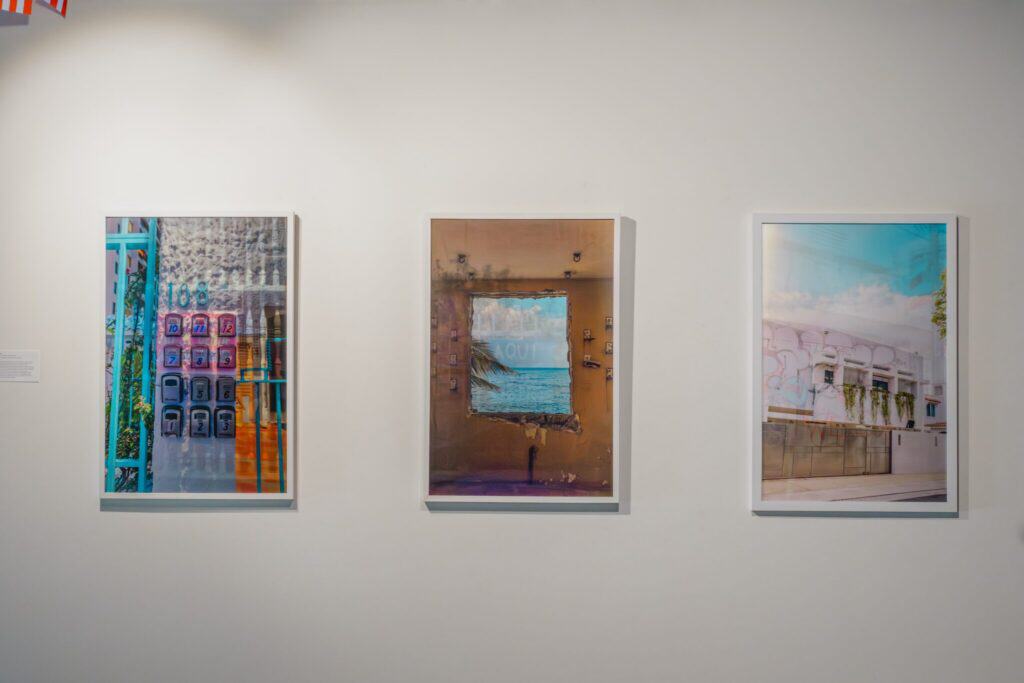
Jo Cosme, Río Piedras, PR (b. 1988) Battle for Paradise, 2025. Digital photography on lenticular printing, 25 x 37. Rapid gentrification fueled by disaster capitalism, tax incentives, and tourism—all benefiting people from the U.S.—has left native Puerto Ricans feeling alienated in their own land. In response, local communities have taken to disrupting and reclaiming spaces with acts of visible resistance. Slogans like “Aquí vive gente / People Still Live Here” powerfully express this dissent, serving as urgent demands to protect Puerto Rico’s land, culture, and identity from continued economic exploitation, displacement, cultural erasure, and systemic marginalization. What defines paradise—and who gets to enjoy it?Increasingly, it seems paradise is a luxury reserved for those who can afford it, often at the expense of the land’s native population.
Courtesy of the artist
What are you working on now?
I’m continuing to expand Welcome to Paradise: ¡Viva Puerto Rico Libre! through new installations, inflatable sculptures, lenticular works, and interactive pieces that continue to examine colonialism, displacement, and the construction of paradise in Puerto Rico and the Caribbean. The work is currently being developed for a solo exhibition at the National Museum of Puerto Rican Arts & Culture, with the long-term goal of becoming a traveling exhibition. I’m also currently participating in a joint residency through Shunpike at 380 Union Street and the Seattle Public Library.
What does receiving the Neddy Award mean to you?
It feels deeply meaningful because for a long time, I wasn’t sure I’d even continue making art after Hurricane María and being displaced from Puerto Rico. To now receive this kind of recognition in Seattle while making work that refuses to flatten Puerto Rico into a postcard image feels very full circle. At a moment when anti-Latinx rhetoric is becoming more visible across the country, it also feels important to see Latinx perspectives supported and taken seriously within these spaces. More than anything, it reminds me that our stories, histories, and lived experiences deserve visibility, complexity, and space to exist here too.
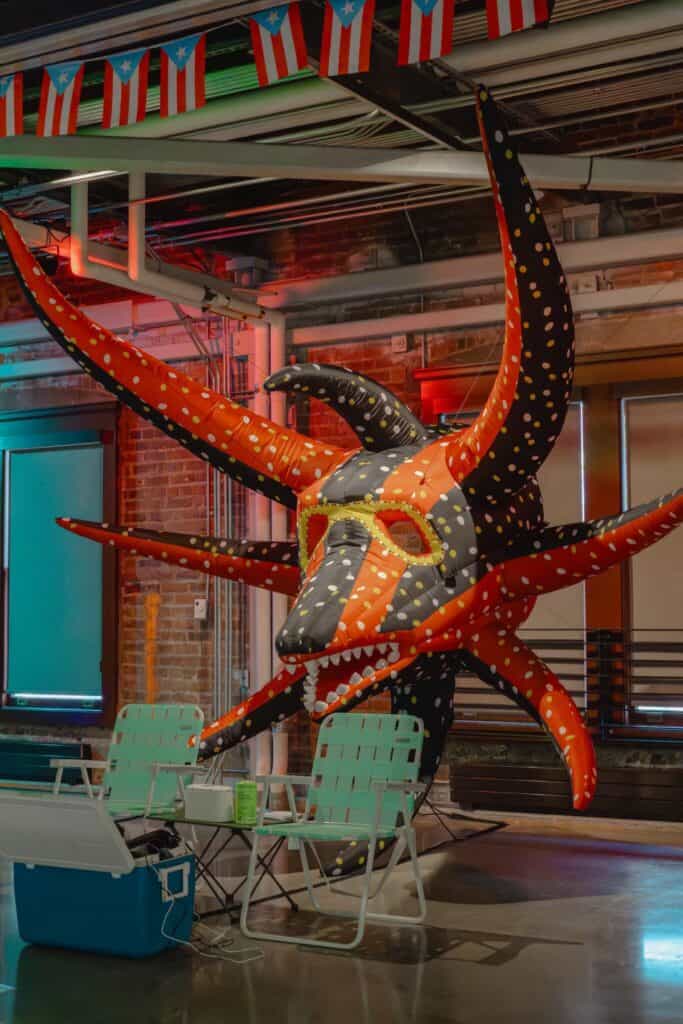
Jo Cosme, Caimito, PR (b. 1988), Live Boricua. PVC plastic inflatable, virtual reality headset, 360 video, cooler, beach chairs, acrylic ice, 10’ x 10’’. Titled Live Boricua after a tourism campaign slogan, this 10-foot inflatable vejigante mask explores the commercialization of Puerto Rican culture and identity. A symbol of Boricua heritage and resistance, the mask becomes a lens for examining who benefits when culture is turned into a product.
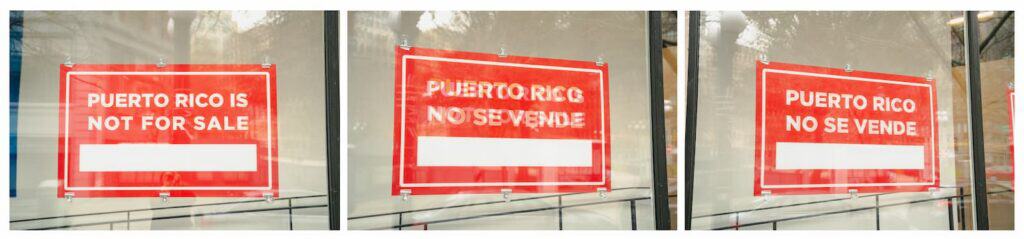
Jo Cosme, Caimito, PR (b. 1988) Puerto Rico is not For Sale / Puerto Rico no se vende, 2024. Digital design on lenticular prints. Each time I return to Puerto Rico, it feels as though more of the island is covered in “For Sale” signs. These lenticular works shift between Spanish and English, reflecting on displacement, gentrification, and the growing sense that Borikén is being sold off piece by piece.
Courtesy of the artist
What do you still hope to accomplish?
I want to keep growing the work into a traveling exhibition, move further into large-scale public art and installation, and create projects that bring people together while opening conversations around colonialism, displacement, and cultural memory.
If you weren’t making art, what would you be doing?
Probably something involving music, I play in a couple of bands in town. Or maybe becoming a teacher.