



NRF’s boss pocketed $1.27m while its $15bn war chest flows into startups and loans.
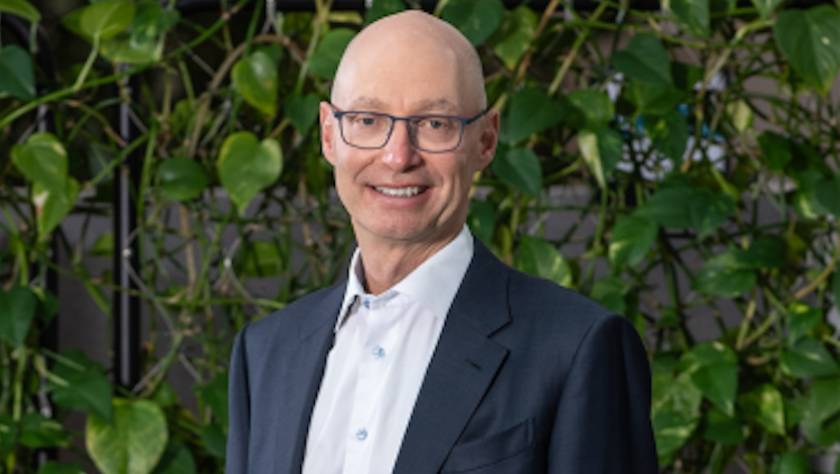
The former banking executive running the National Reconstruction Fund (NRF), David Gall, was paid $1.27 million in his first full year as CEO, including a $352,716 bonus.
The figures, revealed in the NRFC’s 2026 annual report, and show he’s not the one at the federal government’s $15 billion investment fund taking home a seven-figure pay packet .
Another executive, identified only by their pay band, picked up a $432,900 bonus on a $690,500 base salary. Super and long service leave took their package to $1.17 million.
Gall earned $871,409 in base salary. His bonus added another 40.5%. His first five months in the job, from January 2025, brought in $487,004, including a $93,855 bonus.
His FY2026 pay packet is nearly double prime minister Anthony Albanese’s, excluding Gall’s super and leave entitlements. He also made $50,000 more than RBA governor Michelle Bullock.
However, Gall’s remuneration pales in comparison to appointees running government-owned enterprises.
Get the best of Startup Daily straight to your inbox
Want to know the latest in startup news? Subscribe to our daily news and analysis coverage on what’s happening to ANZ startups, investors and the broader ecosystem. And best of all, it’s FREE!
By continuing, you agree to our Terms & Conditions and Privacy Policy.
NBN Co CEO Ellie Sweeney received $3.43 million in FY26, with a base salary of $2.5m, while Australia Post CEO Paul Graham took home $3.1m, including $1.36m in bonuses.
Dennis Barnes, CEO of Snowy Hydro, has a base salary of $1.89m, and for the first time in three years, received less than $2m as the energy company grapples with massive cost blowouts and delays for its pumped hydro scheme.
Perhaps the closest match to Gall’s day job is Ian Learmonth, who ran the Clean Energy Finance Corporation, and earned $1.19m in FY26, about $85,000 less than Gall. The CEFC committed $9.1bn last year, nearly 6x the funding the NRF deployed.
Meanwhile two other senior NRF executives averaged $590,191 apiece, including bonuses of $118,215, and another earned $640,996, including a $149,850 bonus.
Across the organisation, employee benefits jumped 62% to $24.2m as the workforce, including contractors, grew from 64 to 90.
What’s notable about Gall’s pay is that his base salary is comparable with a managing partner at a major VC – and his bonus could perhaps be aligned with the carry partners receive on successful investments, although they have to wait for an exit to receive it.
The NRF board says discretionary bonuses reflect individual and organisational performance.
Signed, sealed, but undeployed
The NRF was a signature Albanese government initiative launched in 2023. Three years on, what taxpayers are getting for their investment depends on what part of the corporation’s annual report you read.
On page 37, the fund says it cleared its $1.5 billion annual investment target, having signed binding commitments worth $1.664 billion across 22 investments in FY26. That rose from $584.5 million a year ago
The NRF ended the financial year with a portfolio of 31 investments and more than $2.2 billion committed since inception – around 15% of its $15bn war chest.
The NRF says that for every dollar it invests, private investors commit another $2.61.
On page 99, the fund explains why it finished June with $1.51 billion in cash, some $1.2 billion more than budgeted. Companies drew down their funding more slowly than forecast. Net cash used for investing came in $609 million below budget.
Gross investment outflows were $1.38 billion. The NRF put $466.9m into equities and lent $424m. Another $490m went into other financial assets, including $430m placed with banks to fund zero-interest loans for manufacturers and logistics businesses. By June 30, the Economic Resilience Program had provided $229.5 million in loans.
Across the portfolio, $915.3 million in previously agreed funding was still available to draw
Where startup money went
Five major deals with in local tech scaleups were worth nearly $200m combined: rocket builder Gilmour Space ($75m), brain implant developer Synchron ($54m), and autonomous vehicle maker Applied EV ($30.7m), with quantum computing startup Diraq and brain mapping company Omniscient Neurotechnology bagging $20m each.
For earlier-stage founders, the NRF’s influence is delivered via a $150m commitment to biotech fund Brandon Capital. That saw $60m invested in 10 medical science companies, three at seed or early stage, backed up by $273m in private capital.
But the NRF’s annual report doesn’t split out how much funding it directed to startups. On the jobs front its says its portcos employ 8,500 people with an estimated 2,300-plus additional positions in the pipeline
The general portfolio returned 7.7%, ahead of its 5.9- 6.9% benchmark range. Its first realised gain came from selling part of its stake in ASX-listed lithium miner Liontown for a $34.8 million profit.
“Financial returns alone, however, are not enough,” Gall wrote in his annual report.
“Every investment we make must also deliver meaningful impact for Australia. We invest to grow industrial capability, commercialise Australian innovation, create secure and highly skilled jobs and strengthen sovereign capability.”
Main Sequence plan
Overnight, the NRF announced it would invest in CSIRO-backed deep tech VC Main Sequence.
The new $150 million Main Sequence NRF Emerging Companies Fund will write cheques of under $10 million over the next five years for companies raising $30m or less. Other Main Sequence funds and private investors will invest alongside it.
The aim is support founders in sectors such as robotics, quantum computing and medical science as they turn research into a product – a key issue in the current debate over the federal government’s changes to the R&D tax incentive.
The NRF could also cut larger cheques for foilow-on rounds in portcos. This week both firms chipped into the $60m first close of a Series C for Adelaide satellite startup Myriota.
Gall, who said the NRF is “already one of Australia’s largest venture investors”, added that the partnership would give his team access to earlier-stage deals “while we continue to build our capability in this area”.
About the author

Simon Thomsen
Simon has been editor of Startup Daily since 2019. He hosted the Startup Daily show on streaming service ausbiz.com.au from 2020 to 2023, and now, the weekly podcast Startup 360.
He was previously associate editor of Business Insider Australia, a national restaurant critic, editor of The Good Food Guide, and newspaper proprietor during a 30-plus-years career in journalism and publishing. He’s also an investor in early stage startups.
Similar topics
Back to top