



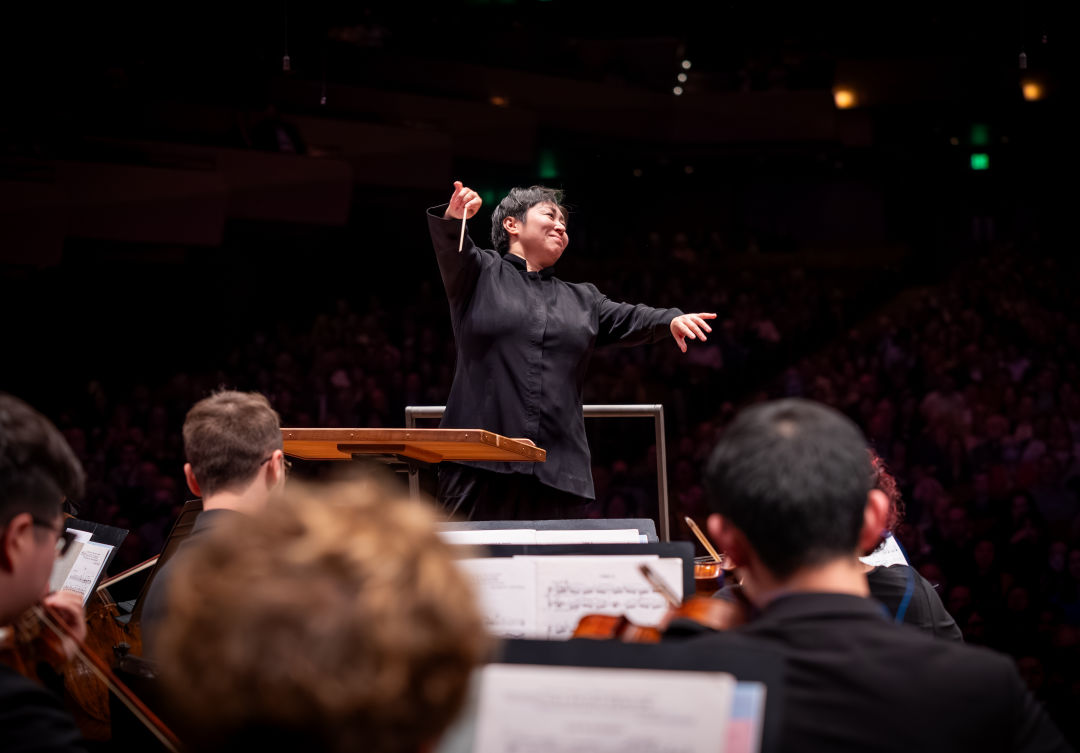
Image: Courtesy James Holt/Seattle Symphony
The new season of the Seattle Symphony actively impresses one person in particular—Xian Zhang, the music director who starts her second year in September. “Every time I read through the program, I actually think, ‘Oh, this is pretty good,’” she says, surprised by her own ambition. The program includes pieces she calls “flashy,” but also special guests like improvisational pianist Gabriela Montero and fan favorite violinist Gil Shaham. And, of course, Zhang’s dynamic, full-body conducting style. It will all happen in a noticeably refreshed Benaroya Hall.
A lot has changed since the Benaroya building debuted in 1998, says acting CEO Maria Yang, who also served as the chief development and project officer and who spearheaded the $20 million upgrade campaign before leaving the organization this summer. “Now you have all these other sources of entertainment available to you through your computer and your TV, and everything is accessible online, so when you go out, you need for it to be a great experience all around,” she says.

Some enhancements are practical, some technological. After adding digital screens to the exterior of the building and transitioning to two main entrances (instead of the wall of doors that used to line Third Avenue), the team turned its attention to the interiors. The outer lobby has seen the biggest transformation, with a brand-new cafe from Ethan Stowell, a relocated ticket desk, and new space for free public programming where the ticket office used to be. (Also, the Symphony’s signature hot magenta is out; a subtler pink is in.)
“It’s beyond what’s on the stage,” says Yang. “That’s obviously extremely important, but it’s also about how you can spend time with your friends in the space before the concert, after the concert, or during intermission.” And, notably, when the symphony isn’t playing at all. The cafe will be open during the daytime, for commuters and the remote worker crowd. Yang says a big factor in pursuing the renovation was to contribute to the revitalization of downtown.

Image: Courtesy Jessica Stein/Jeff Fusco/Seattle Symphony
For this season, Zhang wanted a theme that could arc throughout, providing a focal point for the audience; she chose nature. “Artistically, it just gives people a clearer impression,” she says. “I also find this theme very attractive to most people after the pandemic. People just want to go back to the natural sources, back to the original.” The season-long arc will culminate in a three-week Nature in Music Festival in April, featuring works that evoke everything from sunrises and soaring birds to babbling brooks and towering trees.
Zhang first conducted in Seattle in 2008, in a live-to-film presentation of Sergei Prokofiev’s score for the 1938 film Alexander Nevsky. “Usually it’s very hard, but I just remember the first time I came here, it was surprisingly easy to do that piece with this orchestra and the choir,” she remembers. “I thought, ‘Oh, that was easy. Why did that feel so easy?’ That was my first impression working with this group. And then each time I came back, it just felt like the connection was very strong.” Her favorite from the coming year is also Russian: Alexander Scriabin’s Poem of Ecstasy.
Now that she’s here in a long-term role, Zhang is honing her vision for the symphony. High on her priority list are partnering more with other local arts organizations and reviving the in-house record label—once a Grammy-winning powerhouse, it’s gone dormant in recent years. She’d also love to have the orchestra tour overseas, if funding permits. On September 1, she won’t be the new kid in the organization anymore; Jeremy Rothman officially begins as the new CEO, coming to Seattle from the Philadelphia Orchestra.
The ultimate goal, Zhang says, is reminding the audiences of the storied symphony that has existed in Seattle for 123 years. “The players we hire, the level that they’re playing at is really, really high, but people in Seattle may not realize that or give enough credit for it,” she says.