



Image: Amber Fouts
On Mexican restaurant menus in the US, the term carne asada has come to mean all kinds of things, often involving marinades and heavy spicing. “But carne asada is not what people think here,” warns Osiel Gastelum, one of the two brothers behind Tacos Cometa, a carne asada taco shop that opened on Capitol Hill in March.
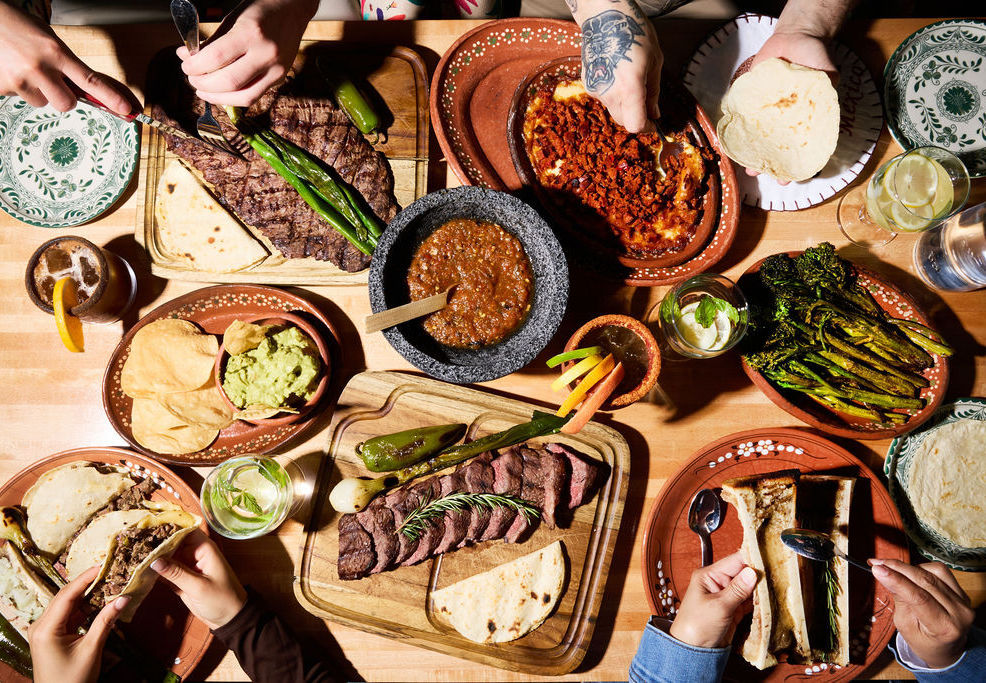
Carne asada literally translates to “grilled meat,” but to most Mexicans, it means something much more. “Carne asada is for gathering,” says Victor Rangel, the founder of Sonora Carne Asada House, an Auburn restaurant that opened a Hillman City location in May. The meat is basic, generally a chuck roast, and the seasoning simple—little more than salt. The complexity comes from the charcoal heat—and the meaning infused from a lifetime of family barbecues and late-night tacos with friends.
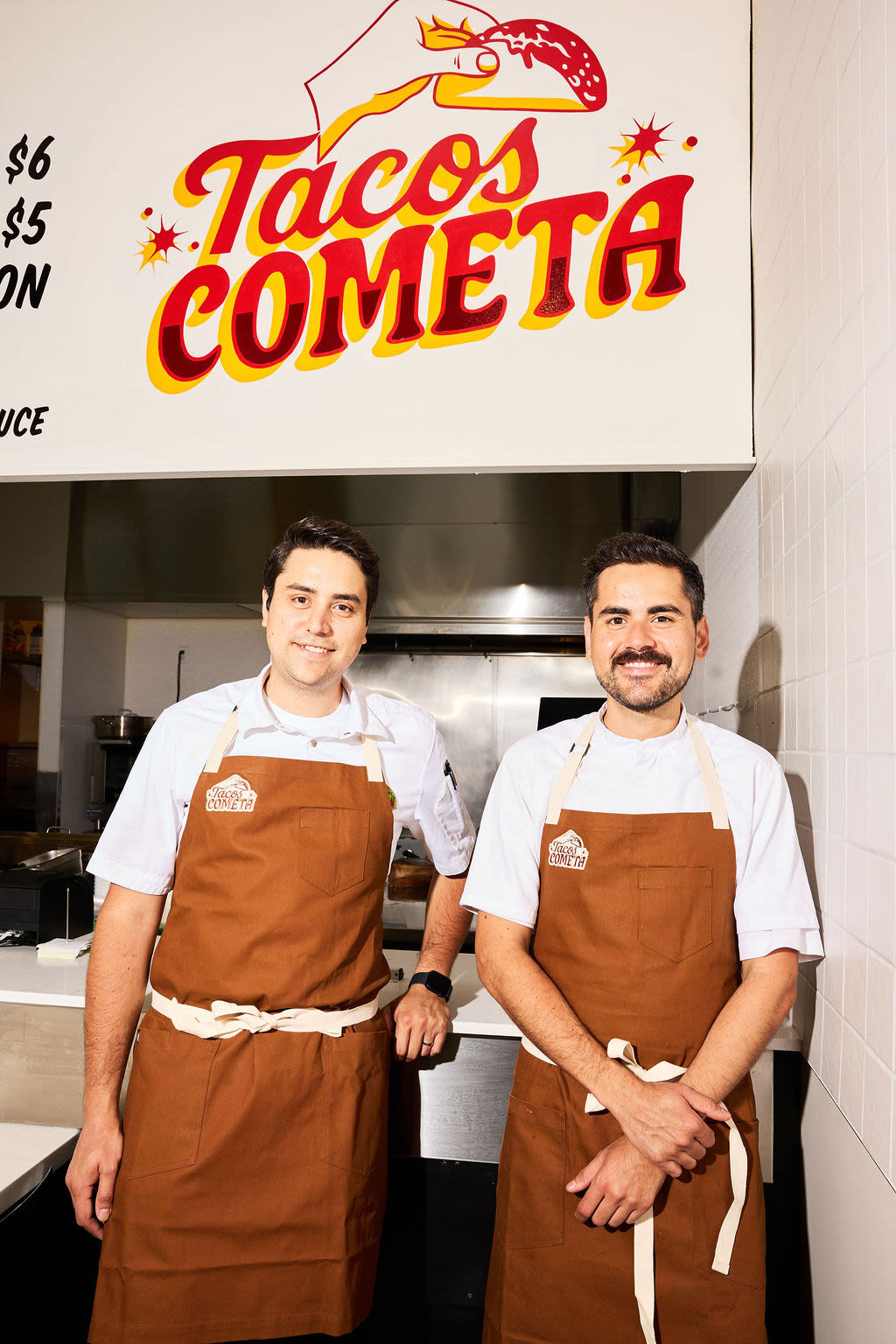
Image: Amber Fouts
“It’s in our culture. It feels super homey to do it. That’s why we’re so passionate about it,” says Osiel, perhaps explaining why Seattle went from zero to three restaurants specializing in the dish in a single spring—Pioneer Square’s Gordo Steak rounds out the trio. The restaurants are completely dissimilar—in price, service, and style—with roots in three different states lining Mexico’s west coast. Yet they share a reverence for a Mexican tradition rooted in simplicity and celebration.
At Gordo, $40 (and up) steaks come elegantly presented in a room crisply decorated with succulents and embroidered pillows on bright white banquettes with wainscoting, projecting the upscale urbanity of restaurateur David Orozco’s Guadalajara roots. Tacos Cometa comes from the Michelin-pedigreed chef-brothers Rey and Osiel Gastelum, where the sole meat and star of its rótulo-style painted menu is the tomato-sauced chopped-beef taco that emulates a hometown favorite from Sinaloa, a taqueria so informal and illustrious that neither brother can say for sure if it has a name.
In Mexico, carne asada is a way to celebrate an A on a test, family in town, or maybe just Sunday afternoon, says Rangel. “For any reason, we make carne asada.” And, because Rangel comes from Sonora, he makes it as is typical in the northwestern state: with flour tortillas and a huge selection of toppings.
Those tortillas, handmade on corners all over Sonora, didn’t exist in Seattle. He found packaged ones had weird scents. “I never get used to it. Never, never, never. I’ve been 20 years here, and I don’t like the smell,” he says. From his 2023 start at a farmers market stand in Auburn, Rangel knew they’d need to make their own tortillas from scratch: thin, small ones for the tacos, fatter ones with milk and beef tallow for quesadillas, and giant ones for burritos.
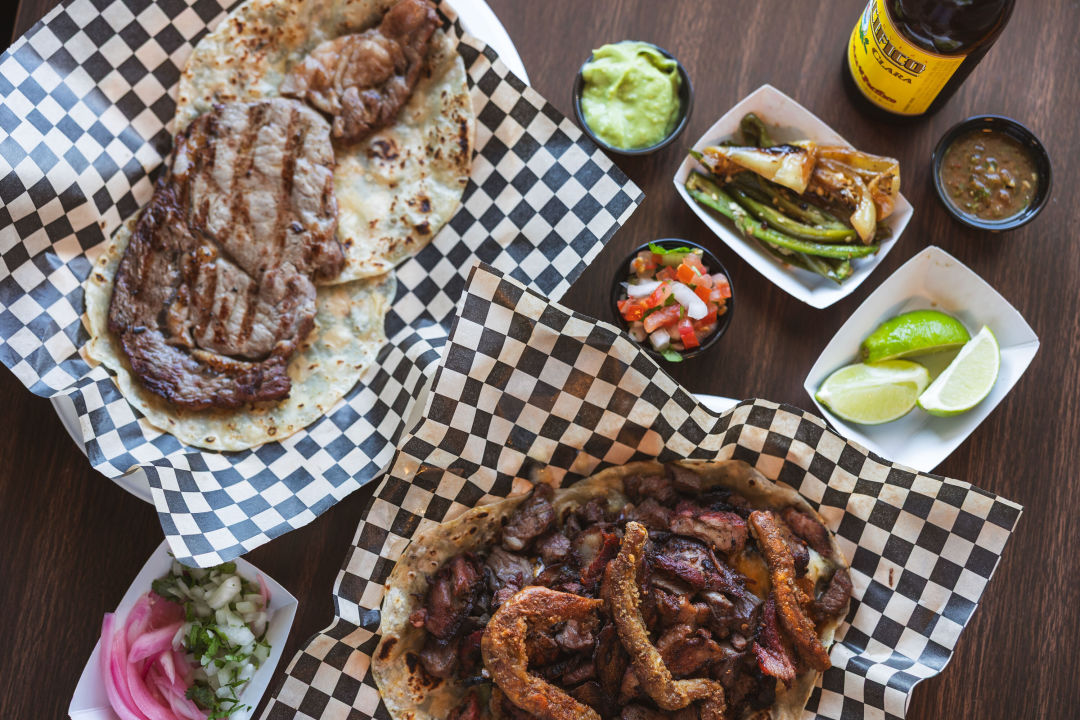
Image: Jane Sherman
The restaurant offers the broadest menu of the three new spots, with a variety of beefy tacos (from $6.50 to $16.50), plus other Sonoran specialties such as bacon-wrapped hot dogs and machaca (dried beef). It also includes housemade sodas, like the tart, sparkling grape uvola, and a Dubai strawberry chocolate dessert.
What truly makes Sonoran tacos Sonoran, Rangel says, is lots of toppings. Sonora Carne Asada House allows customers to go crazy with those at its 18-item garnish bar, which features classics, like magenta pickled onions and carefully peeled cucumber slices, alongside more intriguing options, like crushed ruffled potato chips and yellow gypsy pepper salsa.
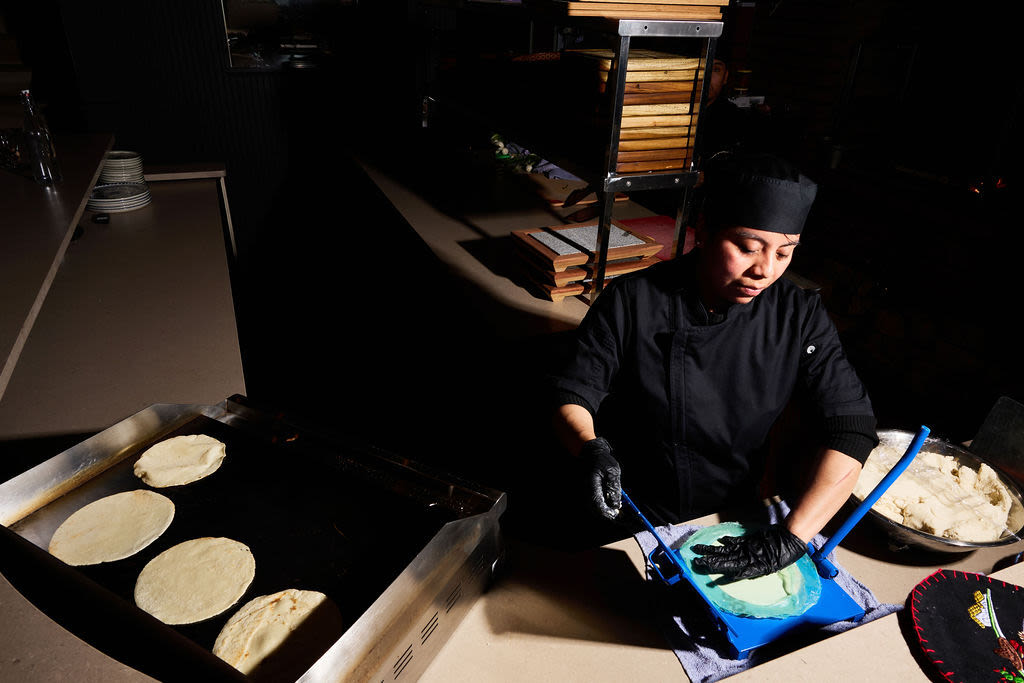
Image: Amber Fouts
The opposite is true at Gordo Steak, the Pioneer Square carne asada house from the founder of Ballard’s Asadero Prime and its meaty siblings, where each entrée comes with a single mild roasted salsa in a molcajete (as well as a salad or starter and unlimited freshly pressed tortillas). Orozco merges his longtime experience as a restaurateur, a few touches copped from training at fancy hotels, and memories of carne asada houses he grew up with in Jalisco; the steakhouse presentations and higher-end flourishes ooze with hospitality expertise.
Water arrives alongside a tray of precisely arranged mint leaves and lime, lemon, orange, and cucumber slices for diners to choose their garnishes. The heftiness of the former bank building (you can still see the safe on the back wall) is offset by basket-style hanging light fixtures and the airiness of uncrowded seating and an open kitchen.
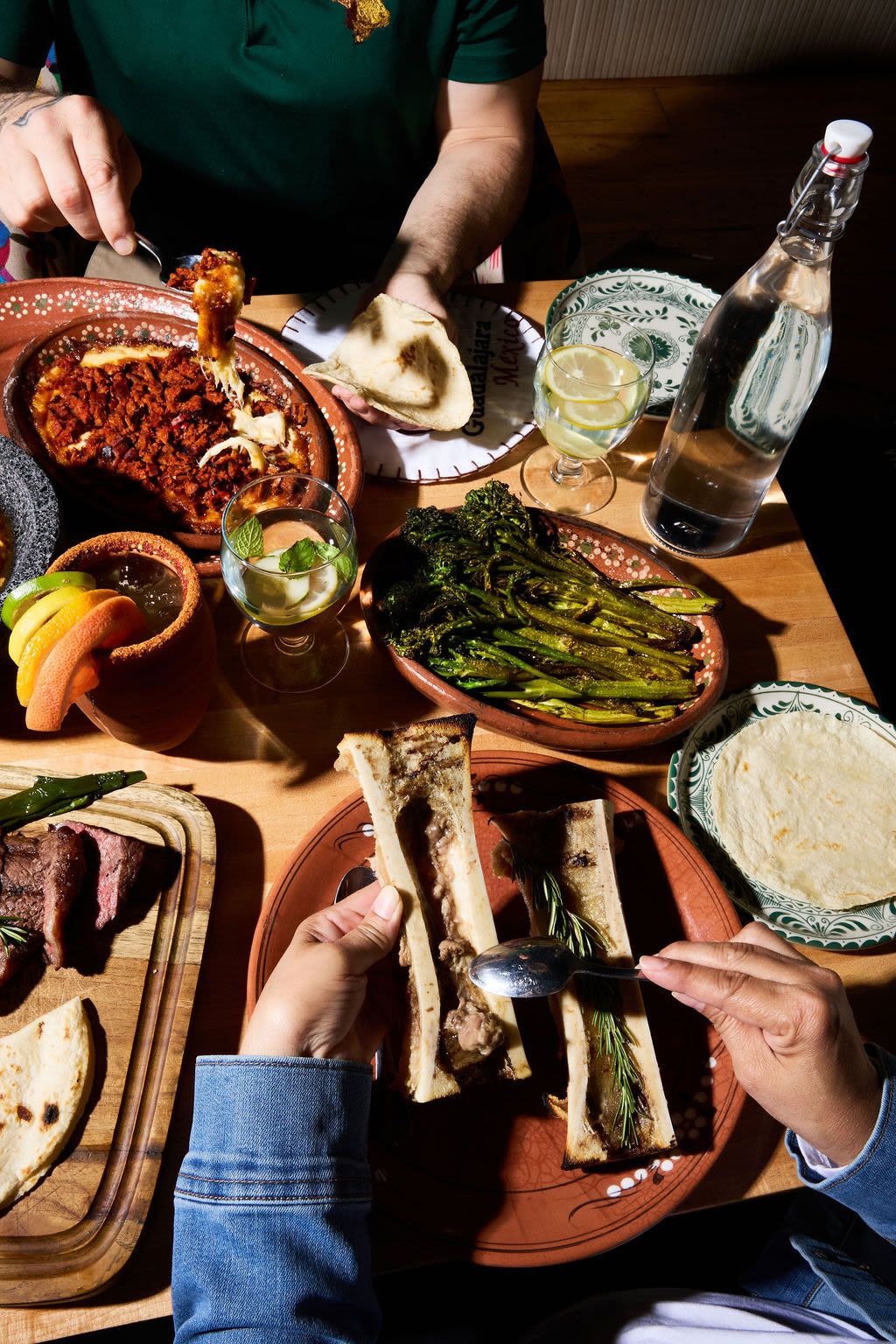
Image: Amber Fouts
The central grill, already in place from the space’s previous life as Bar Sajor (and, briefly, Copal), is the restaurant’s focus: Three of the four tacos ($29.99 per plate) and all six carne asada options are steak; only the form changes. Customers seated at the chef’s counter can watch the meat browning in real time and catch the eye of the woman patting tortillas on to the comal when they need more. And customers seated anywhere can—and should—order the michelada, which is spicy and rich and arrives in an oversized polka-dot glass goblet.
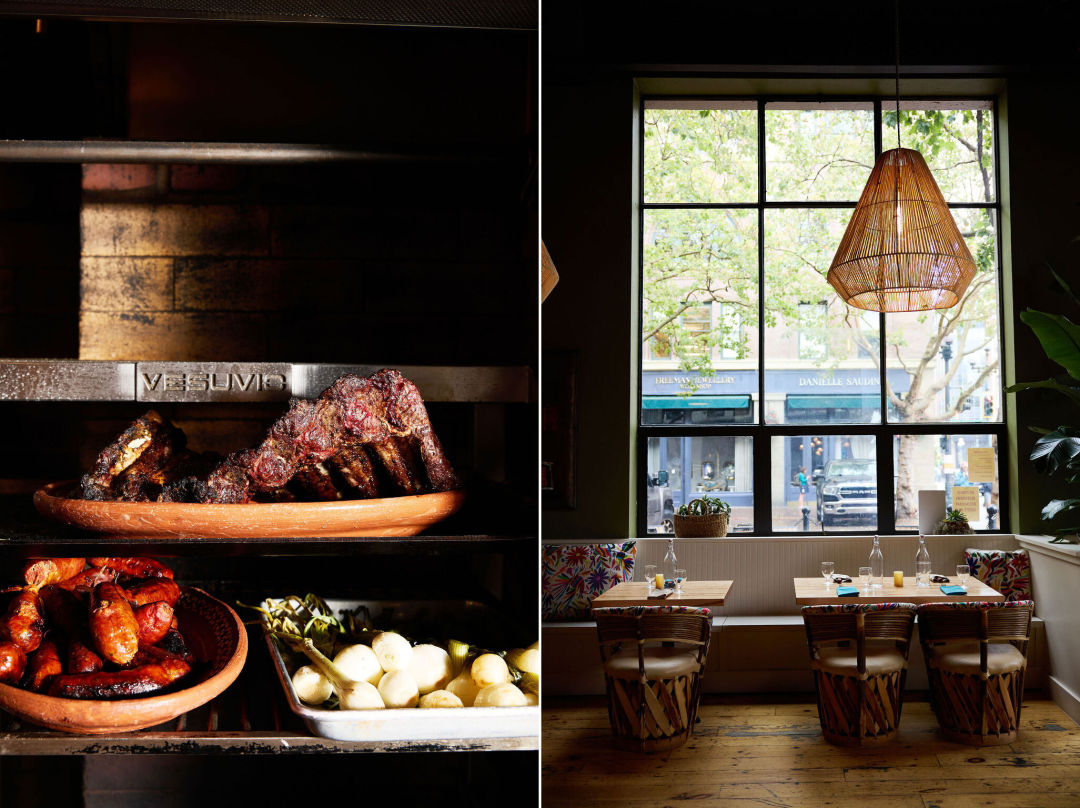
“When you do a carne asada at your house, a barbecue in the woods, or camping, or whatever, that’s what the Mexican tradition is. Everything is cooked in this aspect,” Orozco explains. The idea for the restaurant came, in part, from a revelation while eating an impressively good taco from a streetside stand. “Everything is cooked on the spot,” he noticed. “They put the trompo, they open the plancha, and they do it from the grill to your plate.”
Orozco designed Gordo to bring to Seattle what he missed about the carne asada of home—meat, fire, and that direct connection between the taquero and the customer. Nothing between them but beef, in Mexican cuts—chuck roast, skirt, or thin-sliced ribeye—seasoned with salt, pepper, and paprika, and grilled.
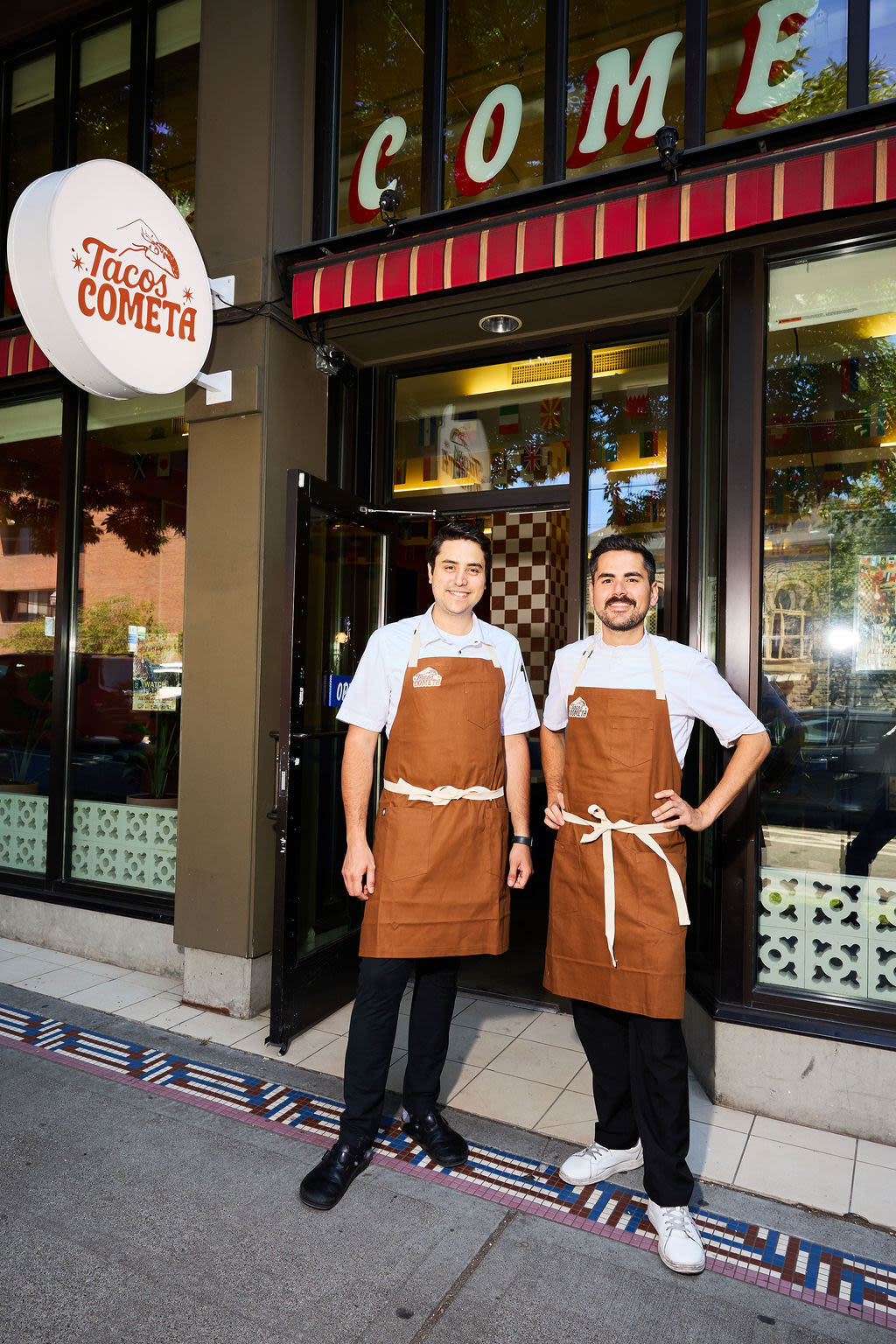
Image: Amber Fouts
To the brothers Gastelum, who grew up in Culiacán, the capital of Sinaloa—between Sonora and Jalisco on Mexico’s west coast—Gordo uses two extra spices. “Carne asada is just a piece of meat and salt,” Osiel says, “that’s it.” (Rangel agrees, Sonora’s seasoning is just salt and what he calls the most important ingredient: smoke from mesquite wood chunks.)
But, while Gordo focuses on steak-like servings of unadorned meat, Cometa is all about a specific kind of taco the brothers grew up eating, served with cabbage, red onion, and tomato sauce on top of the charcoal-grilled carne asada.
“Charcoal in itself, it has different lives,” Rey says. “So knowing when and where to set the meat to get a nice char, all of that—those are tiny factors in a very simple taco that make all the difference. Just knowing how to cook the meat properly to really caramelize all of the outside, get the smokiness.”
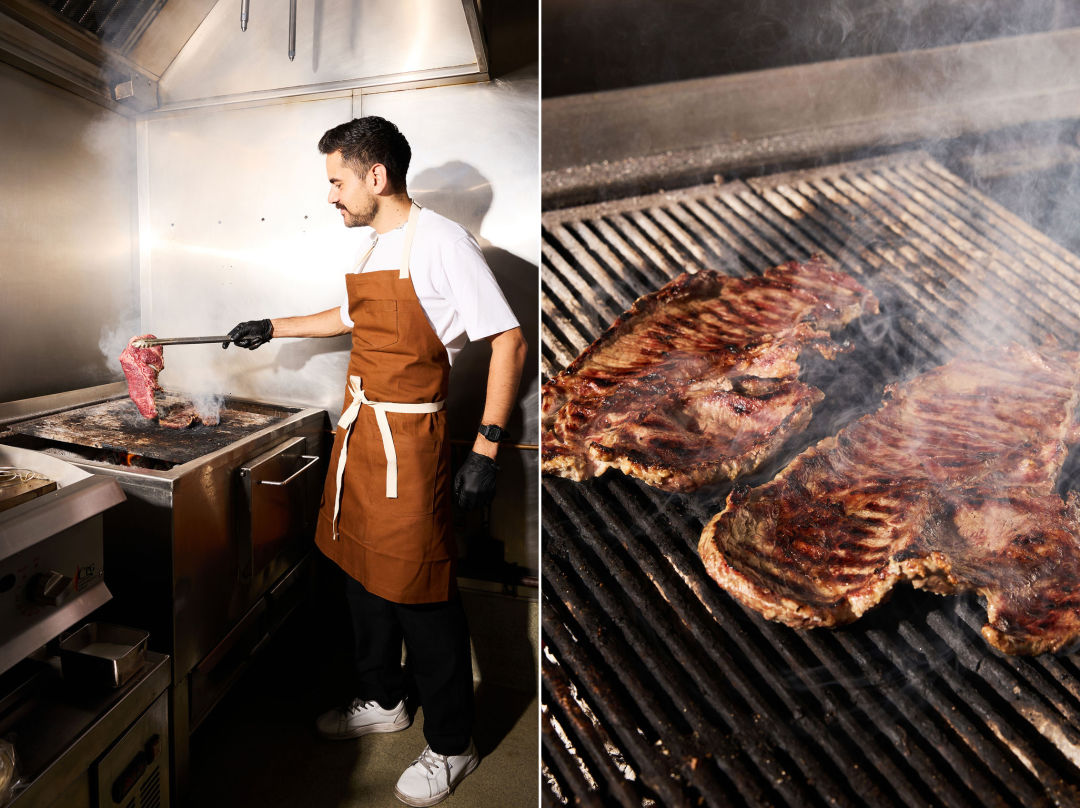
They have no shortage of skill. Both brothers spent time cooking in some of the world’s top restaurants: Osiel as sous chef at Dominique Crenn’s Atelier Crenn in San Francisco, then as chef de cuisine at Sonmi and Curtis Stone’s Maude in LA—three restaurants, with six Michelin stars between them—and Rey at similar levels in Paris.
They came to Seattle nurturing a dream of a Mexican-infused fine-dining seafood restaurant that would incorporate the peak seasonal produce they’d admired on an August visit. Then, they moved to Seattle during the drizzly reality check of November. “The idea of a restaurant is nice, but you don’t make money while you’re building it,” laughs Rey. “We needed to pay rent.”
Like Orozco, a taco from a street stand inspired their next move: opening their own stand. “The idea of having something that we love and share with people, I think this is what excited us,” says Rey. After a year manning their carne asada cart at the edge of Cal Anderson Park, they moved around the corner and indoors, opening Tacos Cometa as a bricks-and-mortar business, the hand-painted menu still almost entirely focused on the singular taco ($5.95).
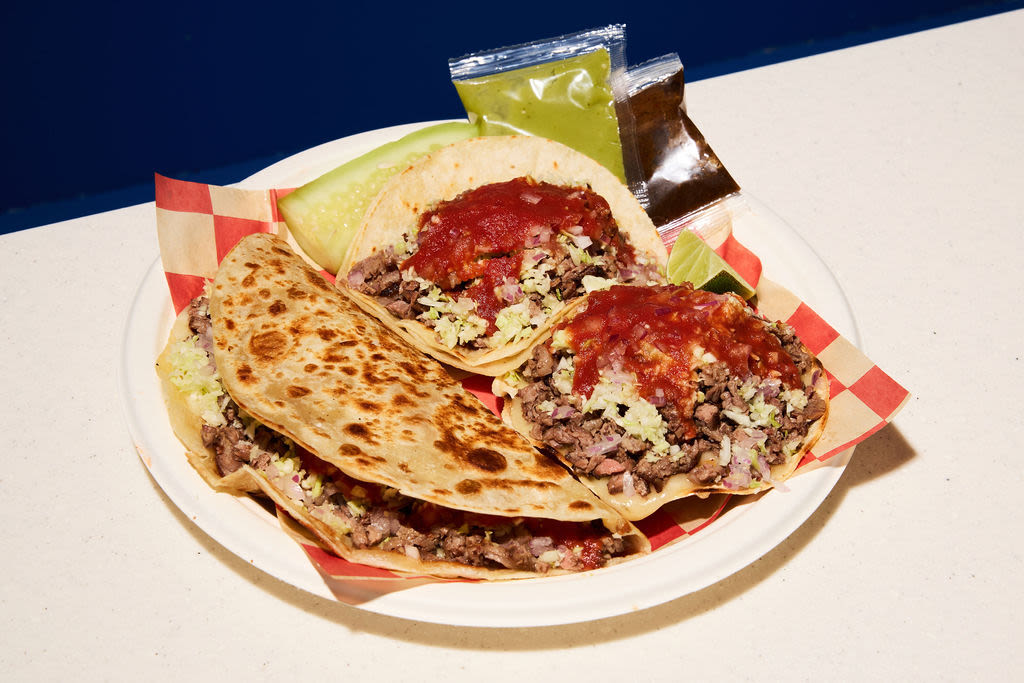
Image: Amber Fouts
“There’s a lot of people who come in here, they say, ‘I would like my tacos with no tomato sauce,’” Rey adds. “They’ve never had it with tomato sauce. They have nothing against tomato sauce.”
They just have no idea what carne asada is—or means.
“We’ve had people tell us that we only have carne asada, so it’s not a real taqueria,” Osiel says. “We’ve had people say, ‘Oh, there’s no cilantro on there, it’s not a real taco.’” But it is, per their hometown favorite in Culiacán, and the brothers opened Cometa to give people that same experience. “They might not have that nostalgia themselves, but they can still share ours,” says Rey.
That matches the spark shared by Gordo and Sonora. It’s the chance to share a dish that feels like coming together to celebrate anything or everything—be it with a 7-dollar taco made by guys who’ve cooked at the world’s top restaurants or a $150 chili-rubbed tomahawk taquiza.
“Try something new,” Rey says to anyone who might not understand the magic. “It might change the way that you think about a taco. Or about food, maybe.”