



Image: Amber Fouts
On a dreary winter Monday evening, the inside of Aslan Tangletown exudes sunny warmth. Though typically the slowest night of the week, when restaurants just hope to cover the cost to stay open, crowds pack in as if it were a warm patio on a June Friday. The smartest tables sit by 5:45, allowing them to take advantage of both the restaurant’s classic happy hour—which includes $2 oysters—and the main event: girl dinner.
At nearly every table, pairs of mostly (but not all) women share the $40 special, which includes Aslan’s “Gem of a Caesar” salad, french fries, and a pair of martinis in that season’s rotating special. In spring, it’s the green elixir, with basil simple syrup; in winter the tinsel tini, with cold brew, coffee liqueur, and peppermint.
“We were suffering on Mondays,” says Layne Carter, the COO of Aslan. She and marketing manager Sadie Santiago put their heads together to find a way to drum up more business at the then-relatively-new Tangletown location. They landed on turning the TikTok trend of girl dinner—low-stress, solo snacks that require no cooking—into a restaurant special. “What is the perfect little snack, if it’s Monday, you get done working, you don’t want to make dinner, but you still want some kind of sustenance?”
Caesar salad, fries, and a crispy drink, they concluded. People clearly agree with them. “It honestly just exploded,” Carter says. They posted on Instagram in late October, and it went viral, but they still weren’t sure how that might translate into business. Fluently, it turns out. “People were committed to girl dinner,” says Carter. Suddenly, instead of wondering if the restaurant could break even on labor, they were adding staff to both the front and back of house.

Image: Amber Fouts
The deal turned Monday nights around for Aslan Tangletown, going from so dead they considered closing that night to consistently packed. (Many restaurants do close that night, including Aslan’s Fremont location.) It’s not just the power of saving money—though it helps—but a deal uniquely suited for bringing people out on a night most prefer to stay in, and doing so in a way germane and essential to the restaurant’s core. It’s a tactic that long-running local restaurants Artusi and Café Lago have employed for eight and 13 years, respectively.
“For the most part, it makes sense to be open more than less, for a bunch of different reasons,” says Stuart Lane, the chef at Artusi. The kitchen staff works four-day weeks (10-hour shifts), and opening every day allows for just the right amount of overlap to give everyone consistent schedules. “At first it was like, we’re scared that there wouldn’t be enough business to go around,” he says. But, instituting a pasta deal in the Capitol Hill restaurant, they found the opposite. “It just kept going up and up and up,” and Mondays quickly surpassed Tuesdays, Wednesdays, and Thursdays.
“People can count on us being open,” says Carla Leonardi, the owner of Café Lago in Montlake. She really didn’t want to close on Mondays, and it didn’t seem fair to cut staff. Still, when Groupon approached her in 2013 about offering a discount, she recoiled. “Why should this corporation profit from me discounting food?” thought Leondardi. She could do that herself. The cost of the ingredients for her pizzas was pretty low at the time, so she began offering them for $10 on Monday nights—low enough to lure folks in during the lull, but enough to make it worth opening. The price has gone up to $15, while the pizzas cost between $21 and $27, normally.

Image: Courtesy Jack Davidson/Cafe Lago
It works because it works: The average table spends less than on other nights, but the volume of customers makes up for it. “It has to be busy,” says Leondardi—and it is: Reservations have become basically mandatory, and it stays packed year-round.
The vibe is a little different than usual on Monday nights; more families, less wine. But—and here’s where it tends to operate differently than many happy hours—it tends to be the same people as on other nights. A couple who might come on Friday for a date come Monday too, this time with their children. “It’s loud, it’s boisterous. It’s got lots of kids. There’s a good energy in there,” says Leonardi.
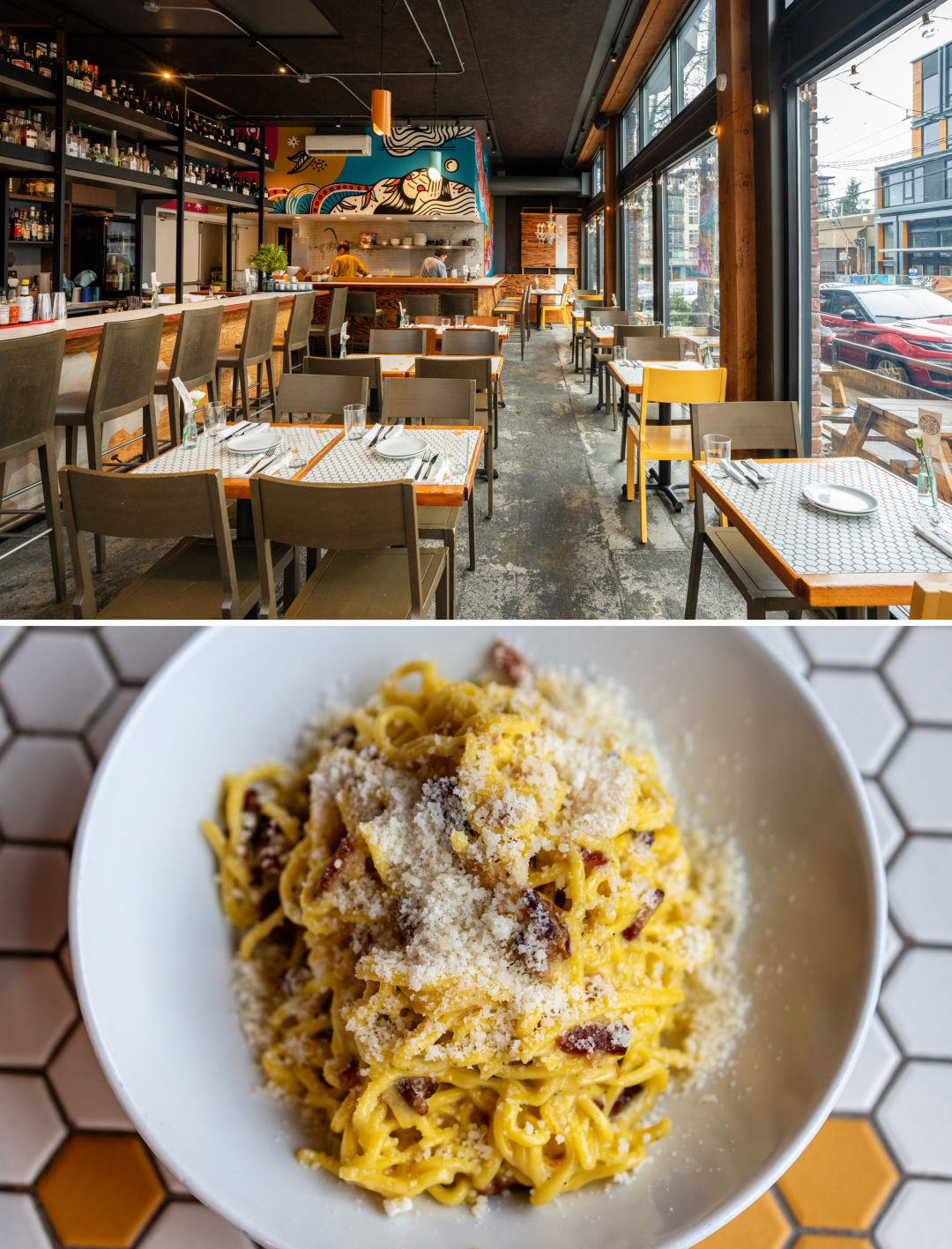
Image: Courtesy Artusi
At Artusi, too, Lane sees customers who come in for pasta night and end up becoming regulars. Couples out for a quiet night who bring the leftover wine home, and, he says, “It’s also a lot of friends catching up, hanging out, having a nice, simple meal.”
The unique hook of a shared dinner is fundamental to the Monday night lure, be it pizza, pasta, or french fries. Rather than competing with other restaurants for the lowest prices, it entices with a homey night out. The total savings from Aslan’s girl dinner versus ordering the same drinks and food is around $15, but watching table after table share intense or animated conversations over salads and fries, it becomes clear it’s not just about money. “That’s what girl dinner accomplishes,” says Carter. “It encourages you to come in with a friend, spend intentional time with somebody that you love.”
It sounds a bit corny, but it gets at the core of the hospitality industry: creating a place for people to have a great experience. To paraphrase Maya Angelou, people will forget what they ate, but they will remember how a restaurant made them feel. And when restaurants can set the table for a special night while turning Monday from doldrums to destination, that becomes the best deal in the business.